International Humanitarian Law and Military Ethics
Here’s What International Law Says About Striking Energy Facilities in War
Amid repeated attacks on energy infrastructure during the Russia‑Ukraine war, legal experts and international institutions have weighed in on when striking energy facilities is lawful under the laws of armed conflict — emphasizing protections for civilian systems and limits on acceptable military targets.


Legal Framework Governing Targets in War
Under international humanitarian law, military forces are restricted in the types of targets they can engage with during armed conflict. The general principle is that combatants must distinguish between military objectives and civilian objects. When it comes to attacking energy facilities, international law permits such strikes **only if they are directed at legitimate military objectives** and **if the attack does not cause disproportionate harm to civilians**. This is a cornerstone of the laws of armed conflict, rooted in the Geneva Conventions and additional protocols, which aim to minimize civilian suffering during warfare. Attacking civilian infrastructure is strictly forbidden, except when it directly contributes to military operations, and even then, the military advantage must outweigh the harm caused to civilians. For energy facilities, this means that a power grid or power plant could theoretically be targeted if it plays a role in the enemy's military operations — such as supplying power to military bases, command centers, or factories that produce military equipment. However, the attacking party must take all feasible precautions to minimize civilian casualties and damage to civilian infrastructure. The principle of distinction is fundamental here: there must be a clear and demonstrated connection between the target and military advantage. If the military objective is vague or indirect, international law may deem such an attack unlawful. These principles aim to preserve the essential infrastructure of a nation while allowing for military action when absolutely necessary for the war effort.
Most components of a nation’s energy infrastructure — such as power grids, substations, and facilities that provide electricity and heating — are considered **civilian objects** under international law. This classification means that, generally, these targets are protected from direct attack, unless they make a significant contribution to the enemy's military capabilities. The laws of war recognize that attacking civilian objects without clear military justification is unlawful, and energy infrastructure typically falls under these protections. This is particularly true for civilian power grids, which are vital to the day-to-day lives of a nation’s population and contribute to the basic functioning of society. In cases where an energy facility is used for military purposes, such as supplying power to military installations or critical war-related industries, the target could potentially be considered a legitimate military objective. However, international law still requires that the attack be proportionate and not cause excessive harm to civilians or civilian infrastructure. For example, if the targeted energy facility is part of a military logistics network but the attack risks causing widespread power outages that impact essential services, such as hospitals, water supply, and civilian communication systems, the strike might be deemed disproportionate. Damage to civilian energy systems without clear and direct military justification is generally considered unlawful, and international courts have prosecuted leaders and military personnel involved in such strikes. In the context of the Russia-Ukraine conflict, this legal framework has been a point of contention, particularly in cases where Russia has targeted Ukrainian energy infrastructure. Humanitarian organizations have called these actions into question, suggesting that they could amount to war crimes given their impact on civilians and noncombatants.
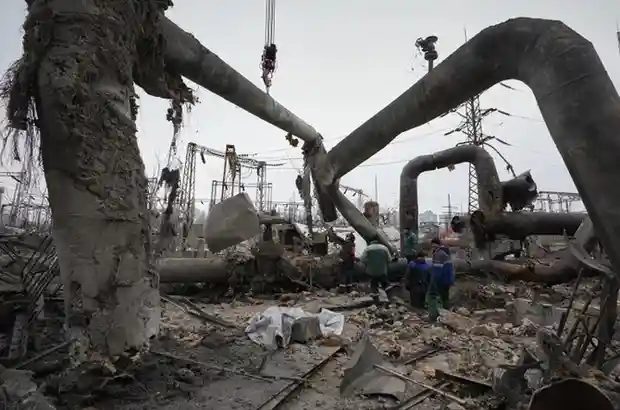
International law also incorporates the **principle of proportionality**, which restricts attacks that may cause excessive harm to civilians in relation to the military advantage gained. This principle is particularly relevant when considering strikes on energy infrastructure, as these types of attacks often carry significant risks for civilian populations. Even if an energy facility is used to support military operations, it is crucial to evaluate whether the expected harm to civilians — such as deaths, suffering, or the loss of essential services — is excessive when compared to the military advantage that will be gained. For example, attacking a power station that supplies electricity to a military base may be justified if it directly contributes to weakening the enemy’s military capabilities. However, if that attack results in widespread outages that affect civilian hospitals, schools, and residential areas, it may violate the proportionality principle. In the case of the Russia-Ukraine war, Russian missile strikes targeting Ukraine’s energy grid during the winter months have raised significant concerns about the humanitarian consequences. The cold temperatures and lack of heating in urban areas, compounded by the destruction of power plants and transformers, could cause serious hardship for civilian populations. Attacks that leave civilians in freezing conditions or without access to essential services like healthcare may be deemed unlawful due to the disproportionate impact on noncombatants. This raises critical questions about the balance between military objectives and humanitarian considerations, which remain central to the legal debates surrounding energy infrastructure strikes during armed conflict.
The **International Criminal Court (ICC)** has played an important role in enforcing international law related to war crimes, including the targeting of civilian infrastructure. In recent years, the ICC has issued arrest warrants for military leaders accused of unlawfully targeting civilian objects, including energy infrastructure. For instance, in 2024, the ICC issued arrest warrants for senior Russian military leaders, including former Defense Minister Sergei Shoigu, for missile strikes that hit Ukrainian electricity infrastructure. The court's pretrial judges determined that the attacks appeared to be directed at civilian objects, and that the harm caused was excessive compared to the military advantage gained. These developments highlight the ICC’s role in holding individuals accountable for breaches of international law, particularly with regard to the protection of civilians during armed conflict. The involvement of the ICC underscores the growing recognition of the need to protect civilian infrastructure and ensure that military actions do not result in unnecessary harm to noncombatants. As the Russia-Ukraine conflict continues, further scrutiny from international legal bodies will likely shape the ongoing debate about the legality of targeting energy infrastructure. Senior commanders and military personnel involved in these operations could face criminal responsibility if it is determined that their actions violated international humanitarian law, specifically the principles of distinction and proportionality. This serves as a reminder that individuals, not just states, can be held accountable for the conduct of war, particularly when it involves the destruction of civilian infrastructure.
States engaged in armed conflict often disagree on the interpretation and application of international law, particularly when it comes to military strategy and the targeting of infrastructure. For example, Russia has asserted that many of its strikes on Ukrainian energy infrastructure are aimed at systems that support Ukraine’s military logistics and overall war efforts, rather than targeting civilians directly. Russian officials argue that these facilities are vital to Ukraine’s military capabilities, making them legitimate military targets under international law. However, Ukraine and its allies, as well as various human rights organizations, have strongly disagreed with this interpretation. They argue that repeated attacks on energy infrastructure, especially in winter, are disproportionate and may constitute war crimes, given the widespread suffering they cause to civilian populations. The targeting of power grids, which deprives civilians of heating, water, and essential services, has been condemned as a deliberate attack on civilian welfare. These divergent legal interpretations underscore the ongoing tension between military strategy and humanitarian law in modern warfare. While Russia’s claims focus on military necessity, critics argue that the ongoing destruction of civilian energy infrastructure serves no clear military purpose and violates international law's core principles. This disagreement highlights the complexities of applying international legal standards in conflicts where the lines between military targets and civilian objects can often be blurred. It also points to the broader challenges of ensuring compliance with international humanitarian law in a time when states are willing to push legal boundaries in pursuit of military objectives.
Leave a Comment
Your email address will not be published. Required fields are marked *