Middle East Conflict and International Diplomacy
Israel Strikes Across Gaza, Killing 24, and Says Militants Attacked Its Soldiers
Israeli forces carried out a series of strikes across the Gaza Strip that killed at least 24 Palestinians, including children and civilians, amid mounting tensions and claims that militants had attacked Israeli soldiers, straining a fragile ceasefire that was meant to curb hostilities.

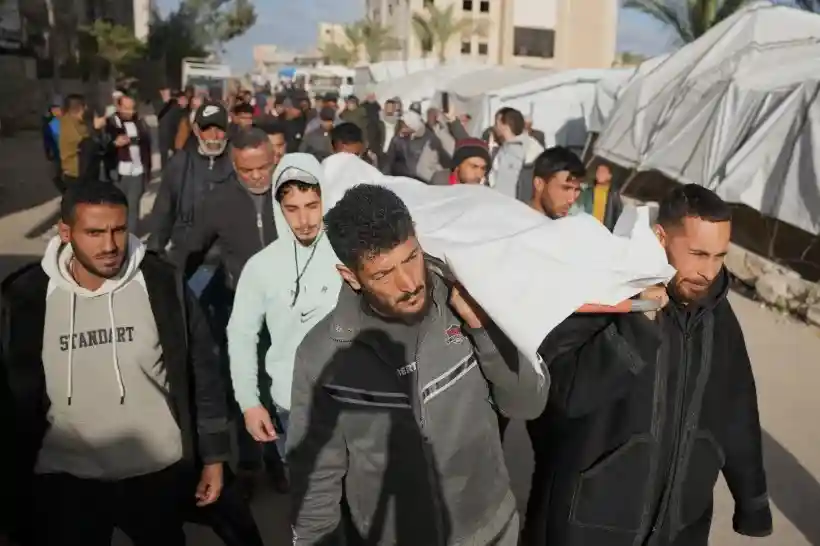
Israeli Airstrikes Kill 24 in Gaza
On February 4, 2026, Israeli air and ground strikes targeted multiple sites across the Gaza Strip, resulting in the deaths of at least 24 Palestinians, including two infants, several children, women, and an on-duty paramedic. According to health officials in Gaza, the strikes took place in densely populated areas such as Gaza City’s Shifa Hospital area, Deir al-Balah, and Khan Younis, intensifying the already dire humanitarian situation in the region. Hospitals and medical teams were overwhelmed with casualties, including dozens of wounded civilians, many of whom had been caught in the crossfire. The airstrikes came amid heightened tensions following claims that militants had attacked Israeli soldiers in the region. This violent escalation has drawn widespread condemnation from various international actors, highlighting the ongoing challenges in finding a lasting peace agreement. The situation in Gaza remains precarious, with no clear resolution in sight. Civilian suffering continues to mount as a result of these repeated flare-ups of violence, leading to fears that the fragile ceasefire agreement that has been in place since October 2025 could unravel. In addition to the immediate loss of life, the strikes have further exacerbated the already dire conditions in Gaza, with many families now left without homes or essential resources. Health systems in the region are struggling to cope with the growing number of casualties, further underscoring the desperate need for a resolution to the conflict.
Israel Says Strikes Targeted Militants After Soldier Attack
The Israeli military has justified its recent airstrikes as retaliatory actions following an attack on its soldiers by Gaza-based militants. According to Israeli officials, the operations were aimed at targeting and neutralizing militant leaders and operatives who posed a threat to Israeli security forces. The Israeli Defense Forces (IDF) claimed that the strikes specifically targeted three militant leaders who were involved in the attack on Israeli reservist soldiers in northern Gaza. The shooting incident that prompted the military response resulted in the serious wounding of an Israeli soldier, which the IDF described as a clear provocation. As is often the case in such situations, the Israeli government maintains that its operations are in direct response to acts of aggression and are aimed at safeguarding the lives of its soldiers and citizens. However, the strikes have led to significant civilian casualties, raising questions about the proportionality of Israel's military response. Critics argue that the escalating violence disproportionately impacts civilians, including children and non-combatants, in Gaza, where infrastructure and public services are already severely limited. Moreover, there are concerns that Israel's continued military actions could undermine ongoing peace efforts and further destabilize the region. While Israel has consistently defended its military actions as necessary for national security, the broader international community remains divided on whether the use of force is an appropriate or effective means of addressing the underlying issues of the Israeli-Palestinian conflict.
Casualties Include Family Members and Civilians
The civilian toll from the recent Israeli airstrikes in Gaza has been significant, with the majority of the 24 reported deaths being noncombatants, including members of an 11-member family from the Tuffah neighborhood in Gaza City. Among the dead were a 12-year-old boy and several other civilians who were caught in the attacks while they were near tents in Khan Younis, a southern city in Gaza. Health officials in Gaza report that dozens of others were injured, many of whom are in critical condition. The strikes have exacerbated the already overwhelming humanitarian crisis in Gaza, where medical facilities are struggling to cope with the influx of casualties and a shortage of essential supplies. Hospitals are reporting a shortage of blood, medical equipment, and staff, and healthcare providers are working under extreme pressure to provide care to those affected by the violence. In addition to the physical harm inflicted by the strikes, the psychological toll on the population in Gaza is profound, with children and families being forced to endure the trauma of losing loved ones and experiencing the destruction of their homes. Human rights organizations have condemned the escalation of violence, calling on all parties to respect international humanitarian law and prioritize the protection of civilians. The loss of innocent lives in this latest round of fighting underscores the devastating consequences of the ongoing conflict, and highlights the need for a renewed commitment to peace negotiations and conflict resolution.
The violence in Gaza has once again strained the fragile ceasefire agreement that was implemented in October 2025, following months of intense fighting between Israeli forces and Palestinian militant groups. While the ceasefire initially brought some relief to the region, repeated flare-ups of violence and retaliatory actions by both sides have raised doubts about the durability of the truce. The recent Israeli airstrikes on Gaza represent the latest breach of the ceasefire, and health officials in Gaza report that hundreds of Palestinians, including many civilians, have been killed since the truce’s inception. Israeli officials, for their part, claim that the airstrikes were a necessary response to the attack on their soldiers, but the civilian casualties resulting from the strikes raise questions about the proportionality of Israel's military response. The international community, including key mediators in the region such as Egypt and Qatar, has called for renewed efforts to uphold the ceasefire and find a long-term resolution to the conflict. Humanitarian organizations continue to emphasize the need for greater access to aid in Gaza, as well as measures to ensure the protection of civilians caught in the crossfire. While the ceasefire had initially reduced the most intense fighting, the repeated violations of the agreement signal that the path to a lasting peace remains elusive. The continued violence undermines the prospects for a peaceful resolution, while the suffering of innocent civilians in Gaza and Israel continues to mount. The international community must play a more active role in pushing for a sustainable ceasefire, greater humanitarian aid, and a broader framework for peace talks to address the root causes of the conflict.
Leave a Comment
Your email address will not be published. Required fields are marked *