Global Nuclear Stability and Arms Control
The Last U.S.–Russia Nuclear Pact Expires, Prompting Fears of a New Arms Race
The New START nuclear arms control treaty between the United States and Russia officially expired, ending binding limits on their strategic nuclear arsenals for the first time in more than 50 years and raising global concerns of a renewed arms race and heightened nuclear risks.

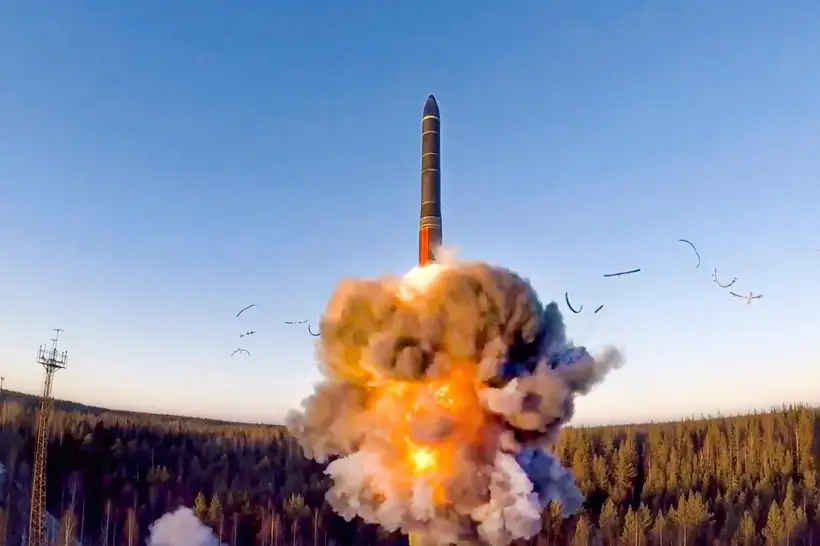
New START Treaty Expires After 15 Years of Limits
On February 5, 2026, the New Strategic Arms Reduction Treaty (New START), which has served as the cornerstone of nuclear arms control between the United States and Russia, officially expired. This marks the end of the treaty’s 15-year tenure, during which it placed strict limits on both nations’ strategic nuclear arsenals. Under New START, both countries were capped at a maximum of 1,550 deployed nuclear warheads and 700 launch systems. The treaty, which was signed in 2010 by U.S. President Barack Obama and Russian President Dmitry Medvedev, aimed to foster stability and transparency by reducing the number of deployed nuclear weapons and enhancing mutual trust. New START also included verification mechanisms, including on-site inspections and data exchanges, which helped build confidence between the two nuclear superpowers regarding each other’s nuclear capabilities. The treaty’s expiration is significant because it removes the legally binding ceilings on nuclear warheads and delivery systems for the first time in over 50 years. For more than half a century, various arms control agreements between the two powers have provided frameworks to limit nuclear stockpiles, aiming to prevent an arms race and mitigate the risks of a catastrophic nuclear conflict. With the expiration of New START, there is growing concern about the future of global nuclear stability. The treaty had been extended once in 2021, but without a new agreement or any formal replacement in sight, both the U.S. and Russia are free to expand their nuclear arsenals without constraints. As both nations reassess their nuclear postures, there is an increased risk of an unconstrained buildup of nuclear weapons, particularly as other nuclear powers, such as China, are also modernizing their arsenals. The void left by the treaty’s expiration has raised alarm among arms control advocates and international leaders who fear the erosion of decades of nuclear arms control efforts.
Although the formal limits imposed by the New START treaty have now been lifted, the verification mechanisms that had ensured compliance have already fallen into disuse in recent years. The COVID-19 pandemic contributed to the suspension of on-site inspections, and in 2023, Russia announced its decision to halt its participation in these verification efforts, further diminishing the treaty’s effectiveness. This left the treaty’s framework weakened, despite the continued existence of the formal limits. With the expiration of New START, both the U.S. and Russia are now no longer bound by these ceilings, and the verification processes that once provided a degree of transparency and accountability have ceased altogether. The absence of a replacement agreement means that, for the first time in decades, there are no formal, legally binding restrictions on the number or type of nuclear weapons either country can deploy. This development is particularly concerning given the lack of progress toward establishing a new agreement or framework to replace New START. The uncertainty surrounding the future of U.S.-Russia nuclear relations has raised significant concerns in the international community, as it could signal the unraveling of key arms control agreements that have helped prevent a full-scale nuclear arms race. Without new arms control agreements in place, both the U.S. and Russia may begin to accelerate the modernization of their nuclear arsenals, potentially increasing the risk of accidental escalation or miscalculation. The suspension of arms control and verification mechanisms also makes it harder for either nation to assess the other’s military intentions, further eroding mutual trust. This uncertainty and the absence of formal mechanisms to monitor and limit nuclear arsenals pose significant risks to global security and nuclear nonproliferation efforts.
Global Leaders Warn of Heightened Risk
The expiration of the New START treaty has prompted alarm among global leaders, with many warning that the collapse of this critical arms control agreement could have far-reaching consequences for global peace and security. U.N. Secretary-General António Guterres called the expiration a 'grave' threat to global peace and urged both the U.S. and Russia to resume negotiations in order to prevent a renewed arms race. Guterres emphasized that the breakdown of nuclear arms control could trigger a destabilizing cycle of proliferation, where countries increase their nuclear stockpiles in response to growing insecurity. Such a scenario would reverse decades of progress toward nuclear disarmament and nonproliferation, potentially leading to a more unpredictable and dangerous international security environment. Arms control advocates have also raised concerns about the erosion of transparency between nuclear powers, which had been a key feature of the New START treaty. Without clear and reliable information about each other’s nuclear capabilities, the risks of miscalculation and accidental conflict could rise significantly. The absence of a new treaty has led many experts to worry that the lack of legally binding limitations on nuclear arsenals could embolden both the U.S. and Russia to develop and deploy new nuclear weapons systems, further increasing the global nuclear threat. Some analysts argue that the failure to extend or replace the New START treaty signals a broader trend of retreat from multilateral diplomacy and arms control agreements. If the U.S. and Russia cannot agree on a successor treaty, there is a real risk of undermining the entire architecture of post-Cold War arms control, potentially giving way to a new arms race involving not just the U.S. and Russia, but other nuclear-armed nations like China, India, and even North Korea.
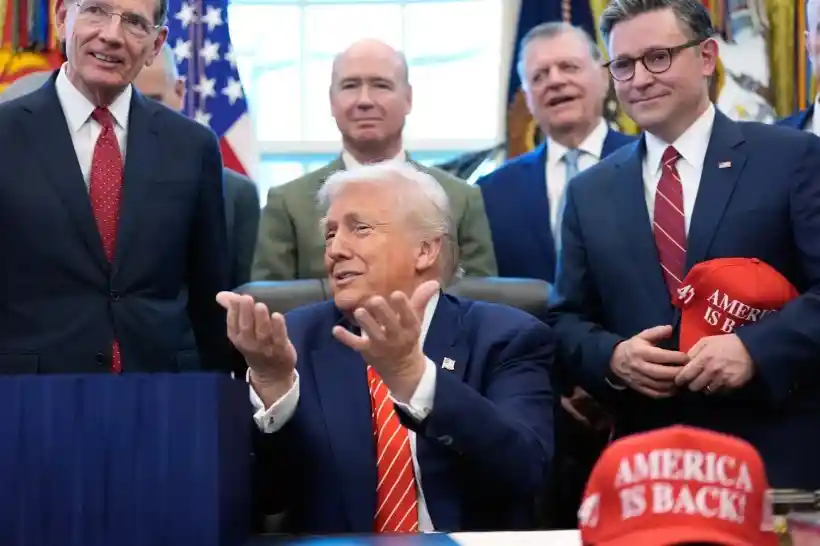
In the wake of the New START treaty’s expiration, the U.S. and Russia have offered competing responses to the evolving situation. Russian officials have expressed their openness to continuing diplomatic dialogue, emphasizing that Moscow is willing to engage in further negotiations if the U.S. reciprocates. However, the Russian government has also made it clear that it will not tolerate any further threats or actions that it perceives as attempts to undermine its security. Russian President Vladimir Putin previously suggested that Moscow could continue to observe the treaty’s limits if the U.S. agreed to engage in broader talks that included other nuclear powers, such as China. This proposal, however, was rejected by President Trump, who insisted that any new arms control agreements must involve China. The lack of progress on this front has underscored the complexity of the negotiations and the geopolitical factors at play. China’s refusal to participate in arms control talks with the U.S. and Russia has complicated efforts to reach a new agreement, as both the U.S. and Russia have expressed concerns about China’s growing nuclear arsenal. While Russia has framed its position as a balanced response to the U.S. stance, U.S. officials have maintained that a return to arms control agreements, such as the extension of New START or a similar framework, is critical for ensuring global nuclear stability. These competing responses highlight the challenges of negotiating nuclear arms control in the current geopolitical environment, where relations between the U.S., Russia, and China are increasingly strained. The expiration of New START, combined with the failure to reach a new agreement, raises questions about the future of global nuclear arms control and whether meaningful progress can be made toward reducing the risks of nuclear conflict.
Leave a Comment
Your email address will not be published. Required fields are marked *