Diplomatic Efforts and Global Security
Russia and Ukraine Hold a Second Day of U.S.‑Brokered Peace Talks in Abu Dhabi
Delegations from Russia and Ukraine continued a second day of U.S.‑brokered peace talks in Abu Dhabi on efforts to end their nearly four‑year war, with trilateral consultations and group work underway amid ongoing hostilities and deep disagreements over key issues.
Talks Resume for Second Day in UAE Capital
Ukraine and Russia have resumed a second day of U.S.-brokered peace talks in Abu Dhabi on Thursday, aiming to find a diplomatic resolution to the ongoing conflict that began with Russia’s full-scale invasion of Ukraine in February 2022. The talks were scheduled to continue in a trilateral format, involving key negotiators from both sides as well as U.S. special envoy Steve Witkoff and Jared Kushner. The format of consultations and group discussions is designed to narrow down the differences on core issues, including territorial disputes, security arrangements, and the broader framework for post-conflict relations. Ukrainian negotiator Rustem Umerov expressed optimism about the direction of the talks, stating that both sides are committed to engaging in sustained dialogue to achieve peace. He noted that while progress may take time, the structured format of the discussions reflects both parties’ willingness to address the complex issues at hand. The diplomatic engagement comes amidst an ongoing military conflict, where significant casualties continue to be reported on both sides. Despite the military pressure, the talks in Abu Dhabi represent a critical effort to de-escalate the situation and avoid further bloodshed. As the negotiations proceed, both Russia and Ukraine will need to overcome significant hurdles, including the issue of territorial integrity and the status of contested regions. The challenges presented by the negotiation process reflect the deeply entrenched positions of both parties, and while the talks offer hope, the road to a comprehensive peace agreement remains fraught with difficulties.
Focus on Ending War Amid Ongoing Fighting
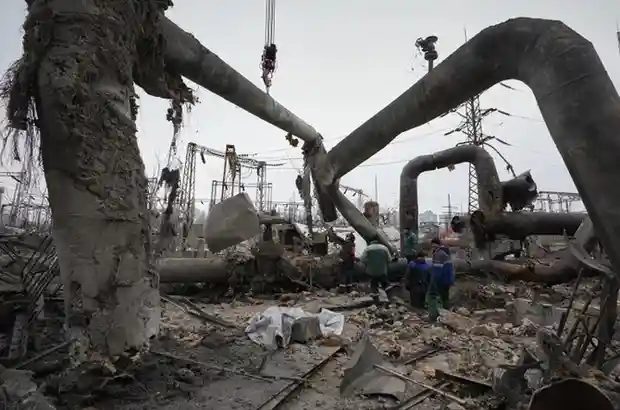
The peace talks in Abu Dhabi are taking place against the backdrop of ongoing military hostilities between Russia and Ukraine. While diplomatic efforts continue, intense fighting on the ground remains a significant obstacle to reaching a ceasefire or peace agreement. In recent days, Russian forces have launched a series of winter attacks on Ukraine’s power grid, resulting in widespread blackouts and further straining the civilian population. On the frontlines, fighting continues over a roughly 600-mile stretch of territory, with both sides reporting casualties on a daily basis. Ukrainian negotiator Rustem Umerov emphasized that for the talks to be meaningful, there must be tangible progress toward peace, as well as strong security guarantees to deter further aggression. He reiterated Ukraine’s demand for concrete assurances regarding the protection of its sovereignty and territorial integrity. Despite the ongoing military conflict, Umerov expressed hope that the diplomatic process could lead to a de-escalation of violence and the eventual resolution of the war. However, the continued fighting on the ground underscores the complexity of negotiating a ceasefire in the midst of active hostilities. Both sides remain deeply entrenched in their positions, making it difficult to reach any significant breakthroughs. The situation is further complicated by the international dimensions of the conflict, with the U.S. and NATO providing support to Ukraine, while Russia continues to receive backing from certain allies. As the talks progress, both sides will need to address the difficult realities of the war and find a way to halt the violence, but the challenges of reconciling their divergent positions remain a significant hurdle.
Russian envoy Kirill Dmitriev reported that progress was being made in the ongoing peace talks, noting that there had been 'positive movement' in the discussions between the two sides. According to Dmitriev, both Ukraine and Russia were engaging meaningfully in the talks, which was a positive sign for the possibility of a future peace deal. Although no formal breakthrough has been reached, both Kyiv and Moscow described the first day of talks as productive, with careful deliberations on practical steps that could lead to a resolution of the conflict. Diplomats involved in the process have emphasized that while the discussions are still in the early stages, the fact that both sides are willing to engage is a significant step forward. Despite the lack of an immediate agreement, some observers view the positive signals from both parties as an encouraging sign that incremental progress may be possible if the talks are sustained. The absence of major breakthroughs in the first day of talks does not necessarily indicate failure, but rather reflects the complex nature of the negotiations, where multiple issues need to be addressed before a comprehensive agreement can be reached. Given the high stakes of the conflict, both sides are likely to approach the talks cautiously, with the understanding that any agreement will need to be carefully negotiated to ensure its long-term viability. While the path forward remains uncertain, the fact that both Ukraine and Russia are at the table represents a glimmer of hope in the search for peace.
The United States has played a central role in brokering the peace talks, underscoring its commitment to resolving one of Europe’s most destructive conflicts in recent history. The U.S. has been actively engaged in diplomatic efforts to bring both sides to the negotiating table, using its influence and leverage to encourage constructive dialogue. The involvement of key U.S. figures, such as special envoy Steve Witkoff and Jared Kushner, highlights Washington’s determination to facilitate a diplomatic solution, even as significant differences remain on core issues. U.S. participation in the talks also underscores the broader international interest in stabilizing the region and reducing the human toll of the war. Ukrainian officials have noted that tens of thousands of military and civilian casualties have been reported since the start of the conflict, with no end in sight. The U.S. has also been a key source of military support for Ukraine, providing crucial aid and resources to help bolster the country’s defense against Russian aggression. Despite the ongoing hostilities, the U.S. remains committed to pursuing a diplomatic solution to the conflict, even as it continues to support Ukraine in its efforts to defend its sovereignty. The stakes of the talks are high, not only for the two directly involved nations but also for the broader international community. A successful resolution to the conflict could have significant implications for global security, potentially setting a precedent for how future geopolitical conflicts are addressed through diplomacy. The U.S. will continue to play a pivotal role in these efforts, but its influence will depend on the willingness of both Russia and Ukraine to make compromises and work toward a lasting peace.
As the peace talks continue in Abu Dhabi, several key issues remain unresolved, and observers caution that reaching a comprehensive peace agreement will not be easy. One of the central sticking points in the negotiations is Ukraine’s territorial integrity. Ukraine has made it clear that it will not accept any territorial concessions, particularly with regard to the regions of Donetsk, Luhansk, and Crimea, which Russia has occupied or claimed since 2014. For Ukraine, the return of these territories is non-negotiable, and any peace agreement must include provisions for the restoration of its sovereignty over these areas. Russia, on the other hand, continues to press for leverage over the occupied regions, demanding that its interests be recognized in any future settlement. This disagreement over territorial issues has been one of the primary obstacles to reaching a ceasefire or peace deal, as both sides are unwilling to make significant compromises. Another major issue is the long-term security arrangements for Ukraine, particularly with regard to its military alliances and future defense posture. Ukraine has sought strong security guarantees to ensure that it is not left vulnerable to future Russian aggression, while Russia has expressed concerns about NATO’s expansion and Ukraine’s potential membership in the alliance. These complex issues underscore the difficulty of reaching a comprehensive agreement, and diplomats involved in the talks caution that sustained negotiations will be needed to bridge these differences. While there have been some positive signals from both sides, the path to peace remains fraught with challenges, and it remains unclear whether a lasting resolution can be achieved.
Leave a Comment
Your email address will not be published. Required fields are marked *