U.S. Politics and Government Budgeting
Trump Signs Bill to End Partial Government Shutdown, Setting Stage for Next Fight
President Donald Trump signed a roughly $1.2 trillion government funding bill that ended a brief partial federal shutdown and funds most of the government for the fiscal year, while leaving a looming battle in Congress over additional funding — especially for the Department of Homeland Security.

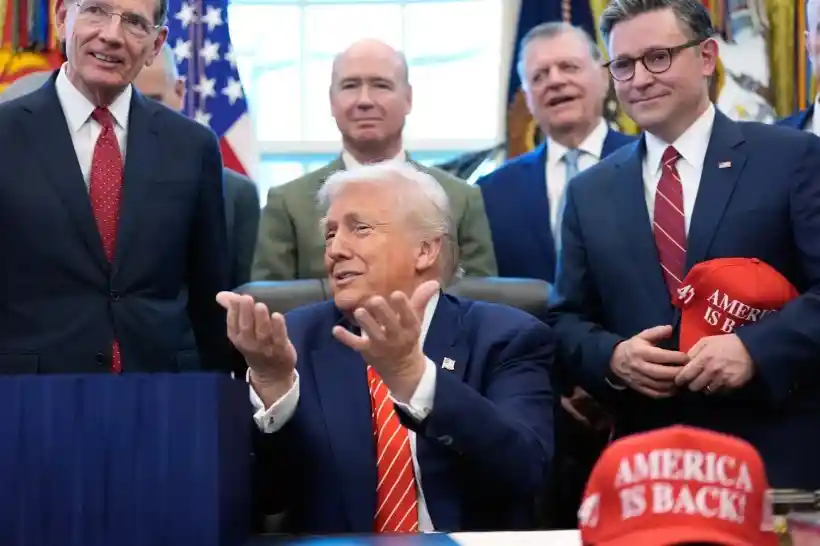
Shutdown Ends After House, Senate Approval
After a brief period of uncertainty, President Donald Trump signed the $1.2 trillion government funding bill into law, officially bringing an end to the partial federal shutdown. The shutdown had occurred due to temporary appropriations lapsing, leading to the furlough of federal workers and the suspension of several government services. The bill passed in the House by a narrow margin of 217-214, following a similar vote in the Senate. The legislation provides full-year funding for most federal agencies and programs through September 30, effectively allowing the federal government to return to normal operations. While the shutdown lasted only a few days, the situation highlighted the political division and intense debates that continue to shape fiscal policy in the United States. Both sides of the aisle faced pressure to quickly restore funding to prevent prolonged disruption of services, and the bill passed with bipartisan support. However, the next funding battle looms large, with Congress still needing to negotiate future appropriations, particularly in regard to the Department of Homeland Security (DHS) and the ongoing issues surrounding immigration enforcement.
The $1.2 trillion spending package includes full-year funding for most federal agencies, ensuring that essential services such as defense, healthcare, and education continue to operate smoothly through the end of the fiscal year. However, the Department of Homeland Security (DHS) only received a temporary extension for its funding, lasting until February 13, 2026. This short-term extension is the result of ongoing disagreements over policy issues related to immigration enforcement. The DHS funding package is thus set to be revisited in the coming weeks, creating a new deadline for Congress to negotiate and settle on a longer-term agreement. The debate over DHS funding centers on the contentious issue of border security and immigration enforcement, with Democrats calling for reforms and oversight measures to ensure that agencies like Immigration and Customs Enforcement (ICE) adhere to human rights standards. Meanwhile, Republicans argue that stricter enforcement is necessary to secure the nation’s borders and prevent illegal immigration. The compromise reached in the bill was seen as a temporary resolution, but it leaves the door open for further clashes in the coming weeks. As lawmakers begin preparing for the next round of negotiations, the pressure will mount for both parties to find common ground on these critical issues.
Partisan Divisions Over Immigration Enforcement
As the U.S. navigates this complex funding issue, one of the key areas of contention remains immigration enforcement. The compromise reached to end the shutdown was largely shaped by Democratic demands for reforms in federal immigration practices, particularly in response to recent events, such as the fatal shootings of two U.S. citizens by federal agents in Minneapolis. In the wake of these incidents, Democratic leaders called for significant reforms to agencies like ICE, including the introduction of body cameras for agents, increased oversight, and a reassessment of enforcement practices. Democrats argue that these changes are necessary to ensure that U.S. immigration enforcement aligns with human rights and constitutional protections. Conversely, Republicans, including House Speaker Mike Johnson, have expressed a willingness to discuss reforms but also highlighted the importance of maintaining strong enforcement policies to secure the border. The party’s concerns center around the notion that reducing immigration enforcement could weaken national security and encourage illegal border crossings. As both sides continue to hold firm on their positions, it’s clear that any further negotiations over DHS funding will require careful compromise, with immigration and border security serving as the most significant hurdles in the ongoing budget discussions.
Back Pay and Federal Operations Resuming
With the passage of the funding bill and the end of the shutdown, federal workers who were furloughed during the shutdown are expected to return to their jobs and will receive back pay for the period of inactivity. This decision is critical for many federal employees who rely on their salaries to support their families and contribute to the nation’s economy. The Office of Personnel Management issued guidance for agencies to reinstate operations following the bill’s enactment, marking a swift return to normal government functions. Federal services that had been disrupted, such as those affecting public health, safety, and national security, are now fully operational again. The back pay provision ensures that workers are compensated for the time lost during the shutdown, addressing some of the financial strain caused by the temporary suspension of government activities. As agencies and departments ramp back up, workers are returning to their positions, from administrative staff to those involved in critical services like law enforcement and healthcare. The resumption of federal operations will help maintain the delivery of essential public services, ensuring the continued smooth operation of the government for the remainder of the fiscal year.
Even though the government shutdown has been temporarily resolved, lawmakers now face a renewed challenge over how to address funding for the Department of Homeland Security (DHS) beyond February 13, 2026. The deadline for a more permanent solution has sparked concerns that further gridlock in Congress could lead to another shutdown if the negotiations falter. The contentious issues surrounding immigration enforcement, border security, and DHS priorities are expected to dominate the next phase of budget talks. Lawmakers have signaled that the debate over DHS funding will be difficult and may involve further compromises. With partisan divisions continuing to shape the negotiations, it is unclear whether a lasting resolution will be reached before the next deadline. As the situation develops, both Democrats and Republicans will need to find a way to bridge their differences on immigration policy and border security. The battle over DHS funding is likely to intensify in the coming weeks, with both parties preparing for another round of high-stakes negotiations. While the recent shutdown may have ended, the next budgetary battle is already set in motion, raising the possibility of more partisan conflicts and even further shutdowns if an agreement cannot be reached.
The challenge of negotiating DHS funding is made more complex by the broader context of U.S. fiscal policy. Lawmakers must balance the need for funding to support the nation’s defense, healthcare systems, and education initiatives, while also addressing the increasingly divisive issue of immigration enforcement. Republicans have emphasized the importance of securing the nation’s borders, pushing for increased funding for border security measures such as building more physical barriers along the U.S.-Mexico border. Democrats, however, have called for a more humane approach to immigration, focusing on protecting immigrant rights and providing oversight to ensure that federal agencies like ICE adhere to stricter ethical standards. The sharp contrast between these positions has created a major roadblock in negotiations, with both parties unwilling to concede on their core demands. As Congress moves closer to the next deadline, there is growing concern that the funding bill for DHS could become a major sticking point that threatens the stability of the broader federal budget process. If the impasse persists, lawmakers may have to resort to another short-term funding extension, further delaying a permanent solution to the DHS funding issue.
The political dynamics surrounding the DHS funding debate also extend beyond the immediate negotiations. In the months leading up to the next fiscal year, both parties will need to prepare for additional battles over other areas of federal funding, including defense spending and social welfare programs. The ability of Congress to address these broader issues will depend on the successful resolution of the DHS funding debate. If the current political deadlock continues, the U.S. government could face additional shutdowns, which would disrupt services across the nation and further strain the economy. Federal workers, businesses, and the American public all stand to be impacted by a prolonged period of budgetary uncertainty. The ultimate resolution of the DHS funding issue will be crucial in determining whether the U.S. government can maintain its operations without further interruptions or whether additional shutdowns will become a regular feature of American political life. While it remains to be seen how the next round of negotiations will play out, one thing is clear: the political battles over immigration enforcement and DHS funding are far from over.
Leave a Comment
Your email address will not be published. Required fields are marked *