Sports Medicine & Athlete Injury Management
Lindsey Vonn’s Decision to Compete With a Torn ACL Is Risky but ‘Possible,’ Experts Say
Lindsey Vonn, the 41‑year‑old American skiing legend, plans to compete in the 2026 Milan‑Cortina Winter Olympics despite a torn ACL. Sports medicine specialists describe her decision as high risk but potentially feasible for elite athletes with advanced conditioning and proper brace support.

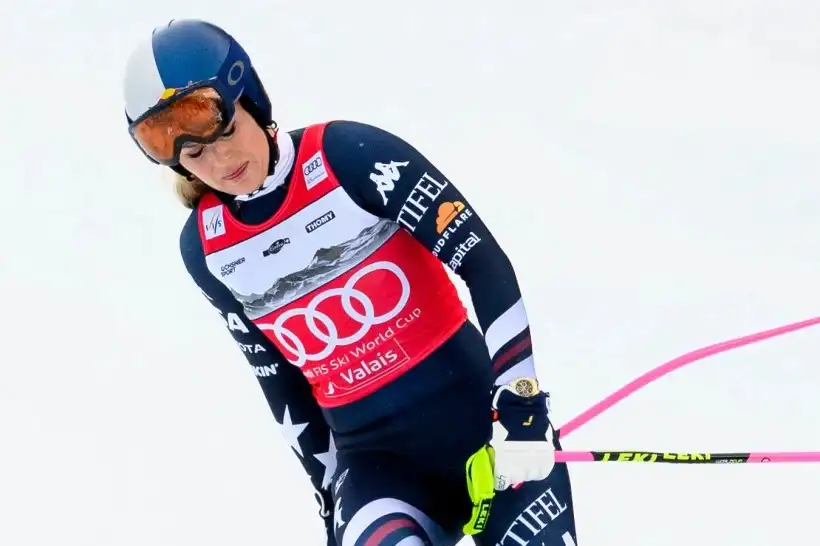
Lindsey Vonn, a five-time Olympic alpine skier and one of the most decorated American athletes in winter sports history, recently suffered a severe left knee injury, including a complete rupture of the anterior cruciate ligament (ACL), associated bone bruising, and meniscal damage during a World Cup downhill event just days ahead of the Milan‑Cortina Winter Olympics. Despite this significant injury, Vonn has publicly expressed her intention to compete in the women’s downhill event scheduled for February 8, citing minimal swelling, her extensive rehabilitation regimen, and the use of a specialized knee brace to maintain functional stability. Her decision reflects a long history of resilience and perseverance, as she has previously returned from multiple injuries to compete at the highest levels of international skiing. The nature of her injury presents extreme challenges, as the ACL is critical for knee stability, particularly during high-speed, high-impact activities such as alpine skiing. While ordinary athletes would require surgical reconstruction followed by several months of rehabilitation, elite competitors like Vonn benefit from advanced physical conditioning, targeted strength training, and neuromuscular control strategies that can temporarily compensate for ligamentous deficiency. Her team has implemented an intensive regimen focusing on quadriceps, hamstring, hip, and core muscle activation to enhance dynamic knee stability. In addition, technological support, including custom knee braces designed to limit deleterious movements while allowing sufficient range of motion for competition, plays a critical role in enabling potential participation. The combination of rigorous physical preparation, medical oversight, and adaptive equipment highlights the extraordinary lengths elite athletes can go to mitigate injury risks while pursuing competitive goals.
Medical experts in orthopedic surgery and sports medicine acknowledge that while competing with a completely torn ACL is highly atypical, it can be technically possible under specific circumstances, particularly for athletes with exceptional conditioning and neuromuscular control. The stability of the knee in the absence of an intact ACL relies heavily on the strength and responsiveness of surrounding musculature, as well as precise coordination during dynamic movements. Experts caution, however, that the forces generated during downhill skiing, which can exceed several times body weight, pose substantial risks to the knee joint, including additional meniscal tears, cartilage damage, or complete joint failure. These risks are magnified by unpredictable terrain, variable snow conditions, and the high-speed nature of Olympic-level competition. Despite these hazards, Vonn’s preparation incorporates daily monitoring of knee stability, controlled practice runs, and real-time adjustments to training intensity, all designed to minimize exposure to extreme strain. Sports medicine specialists emphasize that such strategies are not universally applicable, and decisions to participate under similar conditions are individualized, reflecting each athlete’s strength, prior injury history, and risk tolerance. Her teammates and peers in the professional skiing circuit have publicly acknowledged the challenges while expressing confidence in her preparation, noting that experience, strength, and mental focus are key factors enabling participation. Anecdotal reports from former Olympic skiers who competed with knee injuries reinforce that, although painful and risky, high-level performance is possible with meticulous planning, careful monitoring, and medical supervision. The convergence of physiological readiness, mental resilience, and technological aids exemplifies the modern approach to elite athlete injury management, illustrating the complex interplay between risk mitigation and competitive ambition.
The broader discussion surrounding Vonn’s decision underscores ongoing debates in sports medicine regarding the balance between competitive performance and athlete safety. While her participation is highly individualized, it raises questions about ethical considerations, long-term joint health, and the limits of human performance under injury conditions. Specialists stress that competing with a torn ACL should never be considered a standard practice for the general population, as the risks of permanent damage or secondary injuries are substantial. Nevertheless, for elite athletes like Vonn, decisions are made through comprehensive evaluation involving multidisciplinary teams, including orthopedic surgeons, physiotherapists, strength and conditioning coaches, and sports psychologists. These evaluations consider daily knee function, pain levels, brace performance, and the athlete’s confidence and willingness to tolerate risk. Vonn’s situation also illustrates the psychological dimensions of elite competition, where determination, experience, and resilience can enable athletes to overcome physical limitations temporarily. The narrative of her planned Olympic participation highlights the broader themes of human performance, risk assessment, and injury management in high-stakes sports. Her legacy, marked by repeated comebacks and a commitment to competitive excellence, continues to inspire public interest and professional discussion. As the Milan‑Cortina Olympics approach, medical observers, fellow athletes, and fans alike will closely watch how effectively preparation, medical oversight, and adaptive equipment can collectively support performance while safeguarding long-term musculoskeletal health.
Leave a Comment
Your email address will not be published. Required fields are marked *