Law Enforcement & Immigration Policy
New Orleans Police Say ICE-Detained Recruit Was Verified Through Federal System
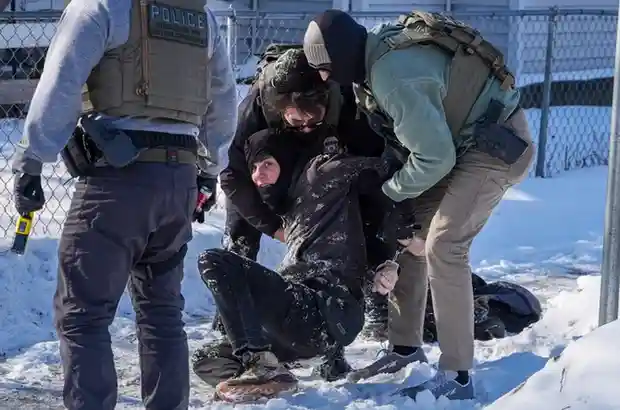
New Orleans police officials say a department recruit detained by ICE had previously been verified through the agency’s employment and identification systems, raising questions about federal coordination, data reliability, and immigration enforcement procedures.


Police Department Confirms Verification
The New Orleans Police Department confirmed that the recruit detained by Immigration and Customs Enforcement had successfully completed all mandatory employment verification and background screening requirements prior to being hired. According to department officials, the recruit’s identity and authorization to work in the United States were validated using federally approved systems designed to confirm employment eligibility. These systems, which are widely relied upon by public and private employers nationwide, are intended to ensure compliance with immigration and labor laws. Police officials emphasized that the department followed established protocols without deviation, conducting criminal background checks, identity confirmation, and eligibility screening consistent with federal and state requirements. The department stated that no irregularities or red flags were identified during the hiring process, and that the recruit was cleared to begin training based on the information available at the time. Officials expressed concern that the detention undermines confidence in verification systems that local governments depend on to make lawful hiring decisions. The department also noted that municipal agencies lack authority to independently investigate immigration status beyond federally mandated checks, making them reliant on the accuracy and completeness of federal databases.
ICE Detention Raises Coordination Questions
The detention of the verified police recruit by ICE has raised significant questions about coordination and information-sharing between federal agencies. City officials and legal observers have questioned how an individual cleared through federal employment verification tools could later be detained by another arm of the same federal government. The incident has fueled concerns about discrepancies between databases, timing of updates, and the interpretation of immigration records across agencies. Critics argue that inconsistent or outdated information may lead to enforcement actions that contradict prior approvals, placing individuals and employers in legally uncertain positions. Officials in New Orleans have called for clarification from federal authorities regarding the basis for the detention and whether new information triggered ICE’s action. The case highlights long-standing challenges in interagency coordination, particularly when different enforcement priorities and legal standards intersect. Experts note that verification systems are only as reliable as the data they contain, and delays or errors in updating records can have serious real-world consequences. The incident has prompted renewed discussion about whether federal agencies are sufficiently aligned in their use of immigration and employment data.
Impact on Police Recruitment Efforts
The case comes at a time when police departments across the United States, including New Orleans, are struggling with recruitment and retention challenges. Law enforcement agencies face shrinking applicant pools, increased public scrutiny, and heightened competition for qualified candidates. City officials warned that incidents like this could further discourage individuals from pursuing careers in policing, particularly those who may have complex immigration histories despite being lawfully eligible to work. Department leaders expressed concern that reliance on federal verification systems must offer certainty to both employers and applicants, noting that unpredictable enforcement outcomes could undermine trust in the hiring process. Recruitment officials emphasized that departments depend on clear and consistent federal guidance when vetting candidates. If applicants fear that passing required checks does not guarantee stability, officials worry it could exacerbate staffing shortages and disrupt training pipelines. The situation underscores broader tensions between local workforce needs and federal immigration enforcement practices, with potential ripple effects on public safety staffing nationwide.
Community leaders and civil rights advocates reacted with concern to news of the recruit’s detention, calling for greater transparency and accountability in immigration enforcement actions that affect local institutions. Advocates argued that individuals who comply with federal verification requirements should not face sudden detention without clear explanation. Legal experts noted that while ICE has broad authority to enforce immigration laws, due process considerations and procedural fairness remain critical, especially when enforcement actions conflict with prior federal approvals. Some community groups warned that such incidents may erode trust between immigrant communities and law enforcement agencies, complicating efforts to build cooperation and public confidence. Attorneys specializing in immigration and employment law pointed out that the case reflects broader debates over the reliability of federal verification tools and the legal protections available to workers who rely on them in good faith. Calls for congressional oversight and administrative review have emerged, as stakeholders seek to understand how such discrepancies occur and how they might be prevented.
The case has broader policy implications for how immigration enforcement intersects with local government operations and public-sector employment. Policymakers and legal analysts suggest the incident may prompt renewed scrutiny of federal verification systems, including how data is shared, updated, and interpreted across agencies. Some lawmakers have called for reforms to improve transparency and ensure that verification outcomes provide meaningful legal certainty. Others argue that clearer safeguards are needed to protect employers and employees who follow mandated procedures. The situation also raises questions about the balance between immigration enforcement priorities and the operational needs of local governments. As federal and local authorities continue to navigate these complex intersections, the case may serve as a catalyst for policy discussions aimed at improving coordination, reducing errors, and reinforcing confidence in systems that underpin lawful employment and public service hiring.
Leave a Comment
Your email address will not be published. Required fields are marked *