Olympic Performance & Sports Development
An Olympic Crisis Is Coming for Team USA. Curling Can Help.
As Team USA confronts mounting challenges in global Olympic competition, analysts suggest that lessons from curling — a sport built on precision, strategy, and collective discipline — may offer a blueprint for improving preparation, resilience, and performance across the American Olympic system.

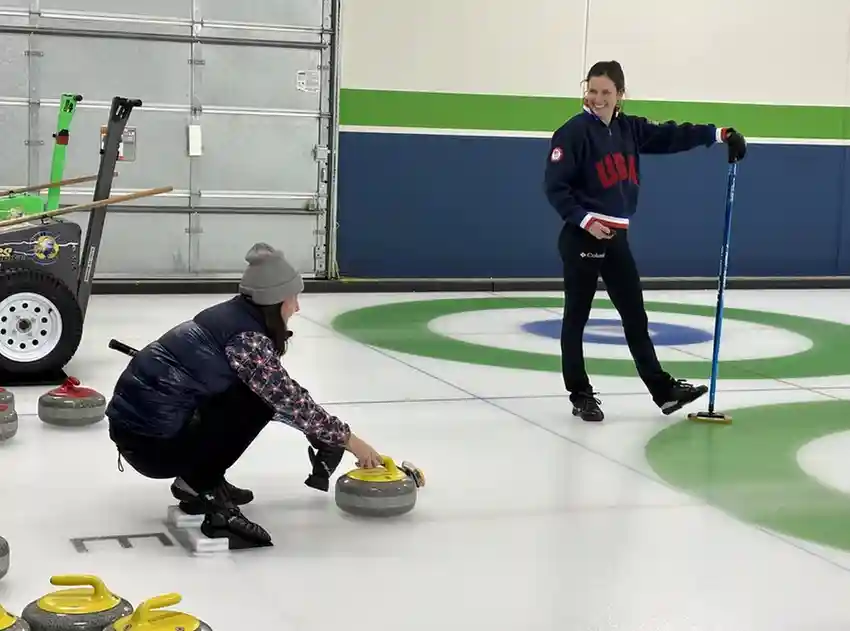
Team USA Faces Performance Challenges
Recent Olympic Games and international championships have raised concerns about the long-term competitiveness of Team USA across multiple disciplines. While the United States continues to perform strongly in select sports, analysts point to declining consistency in medal outcomes and growing gaps in preparation compared with rival nations. These challenges stem from fragmented athlete development pathways, uneven access to elite coaching, and a funding model that often prioritizes short-term success over sustained investment. Unlike countries with centralized national sports systems, the U.S. relies heavily on decentralized programs, collegiate pipelines, and private funding, which can leave athletes without coherent long-term support. This structure has produced elite talent, but it has also created disparities in preparation and limited coordination across sports. As global competition intensifies, particularly from nations with state-backed training systems, concerns are growing that Team USA may struggle to maintain its traditional Olympic dominance. Without reforms focused on consistency, planning, and athlete development, performance shortfalls may become more frequent rather than exceptional.
Curling: A Model of Precision and Strategy
Curling offers a compelling counterexample to many of the structural weaknesses facing U.S. Olympic sports. Despite receiving relatively modest funding and limited media attention, curling emphasizes strategic discipline, repetition, and mental clarity under pressure. Success in curling depends less on raw athleticism and more on preparation, communication, and the ability to execute incremental decisions with precision. Athletes spend years refining technique, studying opponents, and developing shared tactical language within teams. This methodical approach has allowed U.S. curling teams to compete effectively against better-funded international rivals. Experts argue that curling’s emphasis on deliberate practice, scenario planning, and collective accountability provides valuable insights for other Olympic sports. Rather than chasing constant innovation or short-term results, curling prioritizes mastery of fundamentals and strategic adaptability — qualities increasingly essential in high-stakes international competition.
Lessons for Broader Athletic Preparation
Olympic officials and sports performance experts suggest that the principles underpinning curling’s success could be adapted across Team USA’s broader athletic ecosystem. These lessons include prioritizing mental resilience alongside physical training, embedding data-driven decision-making into daily practice, and emphasizing consistency over sporadic peak performance. Curling’s culture reinforces patience, trust, and shared responsibility, traits that help athletes perform under sustained pressure. Applying these concepts across disciplines could strengthen athlete pipelines, reduce burnout, and improve performance stability during major competitions. Analysts argue that success in modern Olympic sport increasingly depends on systems rather than individuals. By adopting structured preparation models inspired by curling, Team USA could address existing weaknesses while building a more resilient and adaptable framework for future Olympic cycles. In doing so, the U.S. may find that solutions to its looming performance challenges lie not in dramatic overhauls, but in disciplined refinement.
Leave a Comment
Your email address will not be published. Required fields are marked *