U.S. Fiscal Policy & Economic Stability
One Path to U.S. Fiscal Disaster Is Most Alarming — and Most Likely
Economists and fiscal analysts warn that the most dangerous path toward a U.S. fiscal crisis may not be a sudden shock, but a slow, politically driven drift — marked by rising debt, chronic deficits, and a persistent failure to confront long-term budget realities.

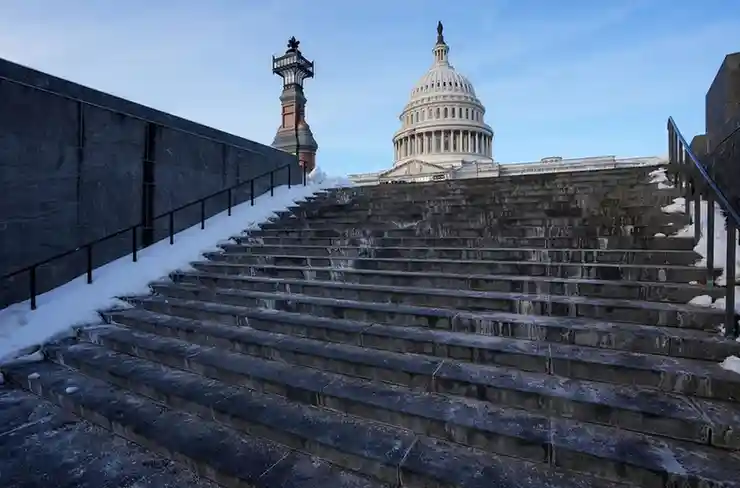
The Quiet Path Toward Fiscal Breakdown
Unlike financial crises triggered by sudden market collapses or policy shocks, many economists believe the most likely route to a U.S. fiscal disaster is a gradual erosion of confidence rooted in chronic overspending and political inaction. Federal deficits have become a permanent feature of the U.S. budget rather than a temporary response to emergencies. Rising entitlement obligations, particularly from Social Security and Medicare, continue to expand as the population ages, while discretionary spending pressures remain politically difficult to restrain. At the same time, repeated tax cuts enacted without corresponding spending reductions have widened the fiscal gap. This slow accumulation of imbalances does not immediately alarm markets, allowing policymakers to postpone hard decisions. However, over time, persistent deficits weaken the government’s financial position and reduce its ability to respond effectively to future economic downturns, military conflicts, or public health emergencies. Analysts warn that confidence in U.S. fiscal management could deteriorate gradually, increasing vulnerability to shocks and reducing the margin for error in policymaking.
Debt Growth and Rising Interest Costs
The rapid growth of U.S. federal debt has transformed interest payments into one of the fastest-growing components of the federal budget. As interest rates have risen from historically low levels, the cost of servicing existing debt has climbed sharply, absorbing a growing share of federal revenues. This dynamic creates a compounding problem: higher interest payments require additional borrowing, which in turn increases future interest obligations. Economists warn that this feedback loop can crowd out spending on critical priorities such as infrastructure investment, national defense, scientific research, and education. Unlike discretionary spending, interest payments provide no public services or economic returns, making them a particularly inefficient use of taxpayer dollars. Over time, sustained increases in borrowing costs could limit fiscal flexibility and force abrupt spending cuts or tax increases. Analysts caution that while the U.S. benefits from the dollar’s global reserve status, relying indefinitely on favorable borrowing conditions carries risks if investor confidence begins to erode.
Political Gridlock and Short-Term Thinking
A core driver of U.S. fiscal vulnerability is persistent political gridlock combined with short-term policymaking incentives. Lawmakers from both parties have often avoided comprehensive budget reforms, preferring temporary fixes that defer difficult choices. Debates over entitlement reform, tax increases, or long-term spending restraint are politically costly and frequently postponed until after elections. Repeated confrontations over government shutdowns and debt ceiling deadlines have further exposed weaknesses in fiscal governance, creating uncertainty that unsettles investors and international partners. Fiscal experts argue that this pattern signals a troubling disconnect between economic realities and political behavior. Rather than addressing structural deficits during periods of economic growth, policymakers often expand spending or reduce taxes, worsening long-term imbalances. This approach undermines credibility and increases the likelihood that corrective measures will be taken only during periods of crisis, when options are more limited and economic damage is greater.
Why a Crisis May Unfold Gradually
Many analysts believe a U.S. fiscal crisis is more likely to unfold slowly rather than erupt suddenly. Unlike smaller economies, the United States has deep capital markets, strong institutions, and the advantage of issuing debt in its own currency. These factors reduce the risk of an abrupt loss of market access. However, gradual warning signs may emerge through rising borrowing costs, downgraded credit outlooks, and declining fiscal flexibility. This slow-motion scenario is particularly dangerous because it allows problems to intensify without triggering decisive political action. Incremental deterioration can normalize higher debt levels and persistent deficits, making corrective measures increasingly painful. Economists warn that delayed responses often require sharper spending cuts or tax increases, amplifying economic disruption. The absence of immediate crisis signals may therefore encourage continued inaction, increasing long-term risks to economic stability and public confidence.
Choices That Could Alter the Trajectory
Fiscal experts emphasize that a U.S. fiscal disaster is not inevitable, but avoiding it will require sustained political will and bipartisan cooperation. Potential solutions include gradual reforms to entitlement programs that reflect demographic realities, adjustments to the tax system to broaden the revenue base, and renewed commitments to budget discipline during economic expansions. Analysts argue that addressing fiscal imbalances early allows for incremental changes rather than abrupt, destabilizing measures. Transparency, long-term planning, and credible fiscal rules could help restore confidence and reduce uncertainty. However, without meaningful reforms, the most alarming scenario — a slow decline driven by inaction — may also be the most likely. The choices made in the coming years will determine whether the U.S. preserves its fiscal resilience or drifts toward a more constrained and unstable future.
Leave a Comment
Your email address will not be published. Required fields are marked *