U.S. Politics
Democrats Grill Bessent at House Oversight Hearing: ‘Stop Covering for the President’
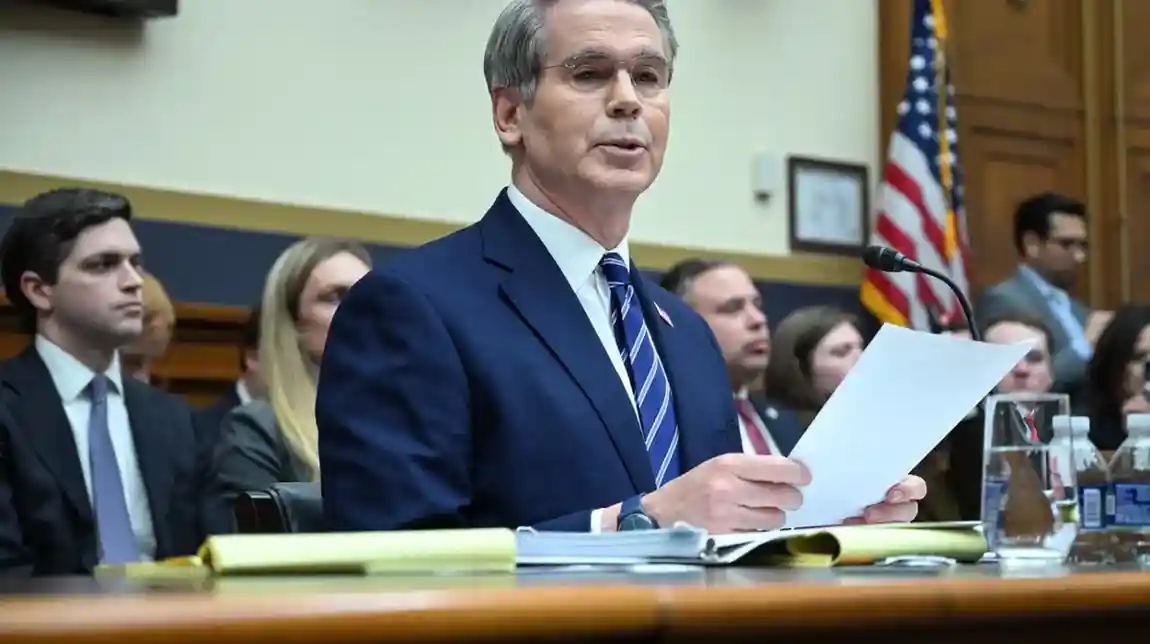
Treasury Secretary Scott Bessent faced intense questioning during a House oversight hearing led by Democratic lawmakers. Members of the committee pressed him on President Donald Trump’s economic agenda, raising concerns about potential conflicts of interest and policy transparency. The hearing quickly turned contentious, with several sharp exchanges between Bessent and lawmakers. Democrats accused him of avoiding direct answers and shielding the president from proper scrutiny. The session highlighted growing political tensions over the administration’s financial policies and accountability.

Tense Exchanges Over Policy and Accountability
Treasury Secretary Scott Bessent appeared before the House Financial Services Committee for what was expected to be a routine review of the Financial Stability Oversight Council’s annual report, but the hearing quickly escalated into a heated confrontation. Democratic lawmakers pressed Bessent on the Trump administration’s tariff strategy, housing affordability concerns, inflationary pressures, and broader economic impacts that they argued disproportionately burden middle-class Americans. Interruptions, raised voices, and repeated procedural warnings underscored how rapidly the session shifted from technical oversight to sharp partisan conflict.
Meeks’s Fiery Call for Accountability
The most explosive moment of the hearing came when Rep. Gregory Meeks of New York accused Bessent of shielding President Trump from scrutiny over alleged conflicts involving Trump family business interests and foreign policy decisions. Meeks directly admonished the Treasury secretary, urging him to stop acting as a political defender rather than a public servant and demanding transparency and accountability. The exchange reflected deep Democratic frustration with what they described as a lack of candor and unwillingness to address ethical concerns tied to the administration.
Broader Democratic Frustrations
Other Democratic members echoed similar concerns, expanding the scope of questioning to include foreign investment oversight, enforcement of financial regulations, and the administration’s broader economic direction. Rep. Maxine Waters engaged in pointed questioning over tariffs and immigration-related economic impacts, at times clashing with Bessent over control of the floor. These exchanges illustrated the widening divide between Democratic lawmakers and Treasury leadership over whether current policies prioritize political loyalty over economic stability and public accountability.
Bessent responded forcefully to criticism, rejecting accusations that he was serving political interests rather than the Treasury Department’s institutional mission. He repeatedly asserted that several lines of questioning fell outside his department’s authority and accused some lawmakers of mischaracterizing economic data and policy intent. His pushback prompted repeated interventions from committee leadership as tensions flared, reinforcing the adversarial tone that dominated much of the hearing.
The confrontational nature of the session highlighted the challenges facing congressional oversight in an increasingly polarized environment. While oversight hearings are designed to facilitate detailed examination of policy and governance, the proceedings frequently devolved into partisan clashes, limiting substantive discussion of complex financial stability issues. Observers noted that the atmosphere reflected broader dysfunction in Washington, where institutional review is often overshadowed by political messaging.
As Democrats continue to scrutinize Trump administration officials, the hearing signaled that Treasury leadership will remain a focal point for oversight battles in the months ahead. Lawmakers indicated that further inquiries into economic policy decisions, regulatory enforcement, and potential ethical conflicts are likely. The contentious exchange underscored that congressional oversight, particularly on economic matters tied to presidential authority, is poised to remain a flashpoint in an already divided political landscape.
Leave a Comment
Your email address will not be published. Required fields are marked *