U.S. Politics
Former Rep. Lee Hamilton of Indiana, Congressional Overseer of U.S. Foreign Affairs, Has Died
Lee H. Hamilton, the longtime Democratic congressman from Indiana known for his leadership in foreign affairs, bipartisan statesmanship and work on high‑profile investigations such as the Iran‑Contra hearings and the Sept. 11 Commission, has died at age 94, leaving a legacy of thoughtful public service.

A Lifetime in Public Service Begins
Lee Herbert Hamilton’s life in public service reflected a steady commitment to democratic principles, intellectual rigor and the belief that government functions best when guided by patience and cooperation. Born in Dayton, Ohio, in 1931 and raised in Indiana, Hamilton developed an early interest in public affairs shaped by the post-World War II political environment and the emerging global role of the United States. After earning degrees from DePauw University and Yale Law School, he entered politics at a time when the nation was confronting civil rights struggles, Cold War tensions and shifting global alliances. His election to the U.S. House of Representatives in 1964 marked the beginning of a congressional career that would span more than three decades. Representing southern Indiana, Hamilton quickly distinguished himself as a lawmaker more interested in substance than spectacle, preferring quiet deliberation over political theatrics. Over the years, his reputation grew as someone deeply knowledgeable about international affairs, willing to listen to opposing views and committed to the institutional role of Congress in shaping foreign policy. His longevity in office allowed him to witness and influence major transitions in U.S. global strategy, from the Vietnam War era through the end of the Cold War and into the challenges of the post-9/11 world.
Shaping U.S. Foreign Policy From Capitol Hill
Hamilton’s most enduring influence came through his leadership on foreign policy and national security, areas in which he was widely regarded as one of Congress’s foremost authorities. As chairman of the House Foreign Affairs Committee, he helped guide debates on U.S. engagement abroad during periods of both cooperation and conflict. He emphasized diplomacy, alliance-building and congressional oversight at a time when executive power in foreign affairs was expanding. Hamilton believed strongly that sustainable American leadership required informed consent from lawmakers and the public alike. His measured approach stood in contrast to more ideological currents in Washington, allowing him to work productively across party lines. During the final years of the Cold War, he supported arms control initiatives and encouraged dialogue with former adversaries, viewing engagement as a tool for stability rather than weakness. His role on the House Intelligence Committee further deepened his understanding of covert operations and intelligence oversight, reinforcing his belief that transparency and accountability were essential to democratic governance. Colleagues often described him as a stabilizing presence, someone whose calm analysis helped defuse partisan tensions during moments of international crisis.
Iran-Contra and the Test of Congressional Oversight
Hamilton’s national profile rose significantly during the Iran-Contra investigation of the 1980s, a defining moment for congressional oversight of the executive branch. As co-chair of the joint congressional committee, he was tasked with unraveling a complex web of covert arms sales and secret funding mechanisms that had bypassed congressional authorization. The hearings captured national attention and tested the balance of power between Congress and the presidency. Hamilton approached the investigation not as a partisan exercise but as a constitutional responsibility, emphasizing fact-finding over political blame. His calm, methodical questioning style contrasted with the highly charged atmosphere surrounding the scandal, earning him respect even among political adversaries. While the investigation exposed serious flaws in the administration’s decision-making processes, Hamilton resisted calls for sweeping political retribution, focusing instead on lessons for institutional reform. The experience reinforced his long-held view that democracy depends on vigilant oversight and that secrecy, when left unchecked, erodes public trust. Iran-Contra became a formative chapter in his career, solidifying his reputation as a lawmaker capable of navigating controversy with integrity and restraint.
Guiding the Nation’s Reflection After September 11
Two decades later, Hamilton again found himself at the center of a pivotal national reckoning as vice chairman of the 9/11 Commission. In the aftermath of the September 11, 2001 terrorist attacks, the nation sought answers about intelligence failures, security lapses and the broader context that allowed such an attack to occur. Working alongside Republican chairman Thomas Kean, Hamilton helped steer the bipartisan commission through a politically sensitive investigation marked by intense public scrutiny and emotional testimony from victims’ families. The commission’s final report became one of the most widely read government documents in modern history, offering a detailed narrative of the attacks and a series of recommendations aimed at preventing future terrorism. Hamilton’s insistence on bipartisan cooperation was central to the commission’s credibility, ensuring that its findings were broadly accepted across the political spectrum. The reforms that followed, including restructuring intelligence agencies and enhancing interagency coordination, reflected the commission’s influence. For Hamilton, the work underscored the enduring importance of institutional learning and collective responsibility in moments of national trauma.
A Voice of Moderation in a Polarizing Era
Throughout his career, Hamilton stood out as a consistent voice of moderation during periods of growing political polarization. He opposed the 1991 Persian Gulf War, advocating continued sanctions and diplomacy before military intervention, a position rooted in his cautious approach to the use of force. While not opposed to military action in principle, he believed it should be a last resort, undertaken with clear objectives and broad international support. This philosophy extended beyond specific conflicts to his broader view of governance, which emphasized compromise, institutional respect and long-term thinking. Even as partisan divisions deepened in Washington, Hamilton maintained relationships across ideological lines, often serving as a bridge between competing perspectives. His colleagues frequently noted his willingness to engage in thoughtful disagreement without personal animosity, a trait that became increasingly rare in later years. After leaving Congress, he continued to speak publicly about the dangers of excessive partisanship, warning that democratic institutions depend on trust, norms and a shared commitment to the public good.
Enduring Legacy and National Recognition
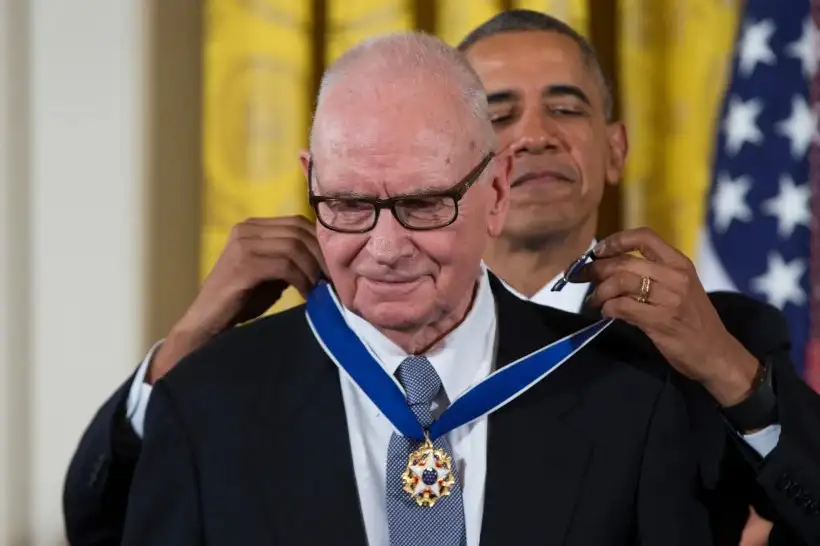
After retiring from Congress in 1999, Hamilton remained deeply engaged in public life, turning his focus toward education, scholarship and mentorship. As director of the Woodrow Wilson International Center for Scholars, he fostered dialogue between policymakers and academics, reinforcing his belief that informed debate strengthens democracy. At Indiana University, he helped shape the School of Global and International Studies, later renamed in his honor alongside Senator Richard Lugar, reflecting his bipartisan legacy. His writings and lectures continued to influence students and policymakers alike, offering reflections drawn from decades of experience at the highest levels of government. In 2015, his contributions were formally recognized with the Presidential Medal of Freedom, honoring not only his policy achievements but also his commitment to civility and democratic values. Hamilton’s death at age 94 prompted tributes from across the political spectrum, with leaders praising his integrity, intellect and quiet dedication to public service. Survived by his children, grandchildren and great-grandchild, his legacy endures as a reminder that thoughtful leadership and bipartisan cooperation remain essential to the health of American democracy.
Leave a Comment
Your email address will not be published. Required fields are marked *