Media & Politics
Trump Says He’ll Stay Out of Netflix, Paramount Skydance Fight to Take Over Warner Bros. Discovery
President Donald Trump said he will not personally intervene in the escalating battle between Netflix and Paramount Skydance over the proposed acquisition of Warner Bros. Discovery, reversing earlier comments and deferring decision-making to the U.S. Department of Justice amid competing bids and antitrust scrutiny.

Trump Reverses Earlier Stance
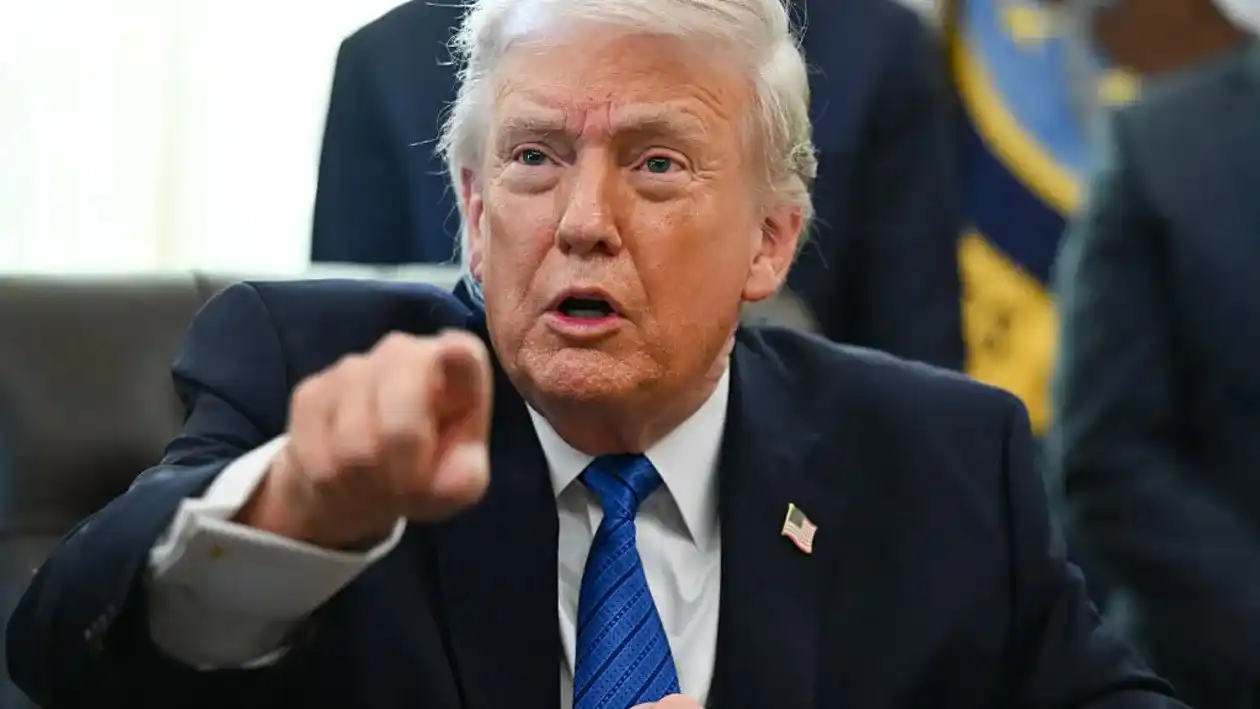
President Donald Trump’s decision to step back from the escalating fight over the future of Warner Bros. Discovery represents a notable shift in tone from his earlier public remarks. In an interview with NBC News, Trump said he would not personally intervene in the dispute between Netflix and Paramount Skydance, despite previously signaling interest in weighing in on the outcome. Last year, Trump had suggested that Netflix’s growing dominance in streaming raised concerns that could warrant presidential attention, particularly in light of broader debates about media consolidation and cultural influence. His new position emphasizes restraint and deference to established regulatory processes. Trump acknowledged that representatives from both Netflix and Paramount Skydance had reached out to him in recent months, seeking clarity on how the White House might approach the competing bids. However, he said he made a conscious decision to avoid direct involvement, citing the importance of allowing independent regulators to do their work without political pressure. The reversal comes amid heightened scrutiny of presidential influence over major corporate transactions, especially those involving media companies with significant political and cultural reach. Observers note that Trump’s change of posture may reflect lessons learned from past controversies, when his comments on corporate mergers and media outlets were seen as blurring the line between policy oversight and personal grievances. By stepping aside, Trump positions himself as respecting institutional boundaries while still maintaining rhetorical distance from companies he has frequently criticized. The move also limits potential legal and political complications that could arise if the president were perceived as influencing an antitrust decision for personal or political reasons. While Trump’s statement does not eliminate political interest in the deal, it signals a willingness to let the process unfold within established legal frameworks. This shift could help insulate the administration from accusations of favoritism or retaliation and reinforces the idea that, at least in this instance, the White House intends to allow regulatory norms to guide the outcome of one of the largest media battles in recent history.
The High-Stakes Battle for Warner Bros. Discovery
At the center of the dispute is Warner Bros. Discovery, a media giant whose film studios, television networks, and streaming platforms represent one of the most valuable collections of entertainment assets in the world. Netflix has proposed a deal valued at approximately $82.7 billion that would acquire Warner Bros. Discovery’s studio and streaming operations, significantly expanding Netflix’s content library and production capabilities. Paramount Skydance, meanwhile, has launched a competing hostile bid aimed at acquiring the entire company, including its cable networks and legacy media assets. The rival offers reflect fundamentally different strategic visions. Netflix’s bid focuses on strengthening its dominance in global streaming by absorbing Warner Bros.’ film franchises, television content, and streaming infrastructure. Paramount Skydance’s approach emphasizes consolidation across traditional and digital media, positioning itself as a vertically integrated entertainment powerhouse capable of competing with Netflix, Disney, and other major players. Shareholders are now faced with weighing immediate financial returns against long-term strategic considerations. Industry analysts describe the battle as a defining moment for the entertainment sector, which continues to grapple with declining cable subscriptions, rising production costs, and fierce competition for subscriber growth. Warner Bros. Discovery’s assets are seen as a rare opportunity to reshape the competitive landscape, making the outcome of the bidding war particularly consequential. The high valuation and aggressive tactics employed by both sides underscore the urgency companies feel to secure scale and content in an increasingly fragmented market. As negotiations and public messaging continue, uncertainty looms over employees, creators, and investors. The outcome will likely influence not only the future of Warner Bros. Discovery but also broader trends in media consolidation, content ownership, and the balance of power within the global entertainment industry.
Justice Department Takes Center Stage
With President Trump stepping aside, the U.S. Department of Justice assumes primary responsibility for evaluating the competing bids for Warner Bros. Discovery. The DOJ’s antitrust division must determine whether either proposed transaction would substantially lessen competition, reduce consumer choice, or create undue concentration in the media and streaming markets. Given the scale of the deals and the prominence of the companies involved, the review process is expected to be extensive and highly scrutinized. Antitrust experts note that a Netflix acquisition of Warner Bros.’ studio and streaming assets could raise concerns about market dominance, particularly in original content production and global distribution. Regulators will likely examine whether such consolidation could disadvantage smaller competitors, inflate subscription prices, or limit creative diversity. Paramount Skydance’s bid, while different in structure, also presents potential competition issues due to the breadth of assets it seeks to control. The DOJ’s role is especially significant in an era when antitrust enforcement has become more aggressive across administrations. Regulators have increasingly signaled a willingness to challenge large mergers, particularly in technology and media sectors. Trump’s public insistence that the DOJ handle the matter independently may help reinforce the legitimacy of whatever decision emerges, even if it proves controversial. Ultimately, the DOJ’s assessment will shape the trajectory of the deal and could set important precedents for future media mergers. Its decision will signal how aggressively the federal government intends to police consolidation in industries that wield enormous influence over information, culture, and public discourse.
Political and Industry Reactions
Trump’s announcement drew swift reactions from lawmakers, industry executives, and policy analysts. Some welcomed the president’s hands-off approach, arguing that it reduces the risk of politicizing an already complex antitrust review. They contend that regulatory agencies are better equipped to evaluate the economic and competitive implications of the deal without interference from the White House. Others, however, expressed skepticism, noting that Trump’s past rhetoric toward media companies has often been hostile. Critics argue that even without direct intervention, presidential statements can influence public perception and create indirect pressure on regulators. Some Democratic lawmakers reiterated concerns about media consolidation, urging the DOJ to scrutinize both bids carefully to protect competition and workers in the entertainment industry. Within Hollywood and the broader media sector, reactions have been mixed. Executives and investors are closely monitoring the situation, aware that regulatory outcomes could significantly affect stock prices and strategic planning. Creative professionals have voiced concerns about how consolidation might affect employment, creative autonomy, and the diversity of voices represented in film and television. Despite differing views, there is broad agreement that the stakes are high. The outcome of the Warner Bros. Discovery battle will reverberate across the industry, influencing future deal-making and shaping expectations about how government oversight interacts with corporate ambition in the media landscape.
Shareholder Decisions and Corporate Strategy
Beyond regulatory approval, the fate of Warner Bros. Discovery will also depend on shareholder decisions. Investors must assess which bid offers the best combination of financial return, long-term growth potential, and strategic stability. Netflix’s proposal promises integration into a dominant streaming platform with global reach, while Paramount Skydance offers a vision of consolidated media power spanning traditional and digital formats. Shareholders face complex calculations. Netflix’s track record of subscriber growth and international expansion is appealing, but concerns remain about market saturation and rising content costs. Paramount Skydance’s bid, while ambitious, carries risks associated with managing a broad portfolio of assets in a rapidly changing media environment. Corporate governance considerations also play a role. Boards and executives must weigh fiduciary responsibilities against broader implications for employees, creators, and the company’s cultural legacy. Warner Bros.’ iconic franchises and history add emotional and reputational dimensions to what might otherwise be a purely financial decision. As shareholder votes approach, lobbying efforts and public messaging are likely to intensify. The decision will not only determine ownership but also signal how investors view the future of media conglomerates in an era defined by disruption and consolidation.
Broader Implications for Media Consolidation
The battle over Warner Bros. Discovery highlights broader questions about media consolidation and its impact on democracy, culture, and competition. Large media mergers concentrate control over content creation and distribution, raising concerns about reduced diversity of viewpoints and increased corporate influence over public discourse. Supporters of consolidation argue that scale is necessary to survive in a competitive global market, particularly against technology giants with vast resources. They contend that mergers can create efficiencies, support high-quality content, and ensure the financial viability of major studios. Critics counter that consolidation often leads to layoffs, homogenized content, and diminished opportunities for independent creators. Regulators must balance these competing perspectives while navigating legal standards that require proof of harm to competition. The outcome of this case could influence how future mergers are evaluated and whether policymakers seek to strengthen antitrust laws to address modern media realities. As audiences increasingly rely on a handful of platforms for entertainment and information, the decisions made in this case will shape the media ecosystem for years to come, affecting not only business outcomes but also cultural expression and public trust.
What Comes Next
With President Trump formally stepping aside, attention now turns to regulators, shareholders, and corporate leaders who will determine the next chapter for Warner Bros. Discovery. The coming months are expected to bring detailed antitrust reviews, shareholder votes, and continued public debate over the merits of each bid. Regardless of the outcome, the episode underscores the growing intersection of politics, media, and corporate power. Trump’s decision to defer to the Justice Department may help preserve institutional norms, but it does not diminish the political significance of the deal. Media ownership remains a sensitive issue, particularly in a polarized environment where information and entertainment play outsized roles in shaping public opinion. As the process unfolds, the Warner Bros. Discovery fight will serve as a case study in how modern democracies navigate the tension between free markets, regulatory oversight, and the public interest. The final decision will not only determine the future of a storied media company but also signal how power is distributed in the evolving media landscape.
Leave a Comment
Your email address will not be published. Required fields are marked *