Middle East Conflict
US-Israel Attack Iran Live Updates: Kuwait says several 'US warplanes crashed'; Saudi's Aramco oil refinery hit by Iranian drone
Multiple reports of military strikes and retaliatory actions across the Middle East as tension between US, Israel, and Iran reaches a breaking point, affecting regional stability and global oil markets.

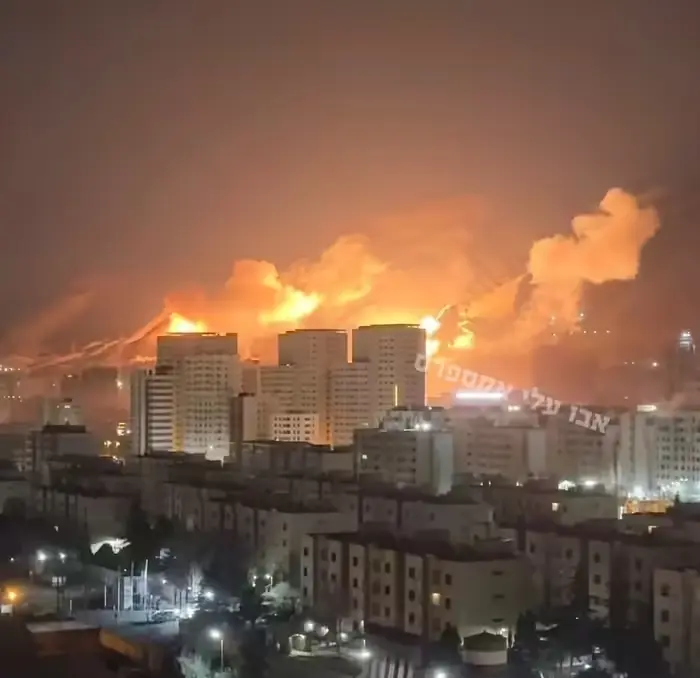
Unprecedented Escalation in the Middle East
The geopolitical landscape of the Middle East shifted dramatically today as coordinated strikes by U.S. and Israeli forces targeted strategic Iranian infrastructure, an event that marks the most significant escalation in regional hostilities since the late 20th century. This operation, described by high-ranking defense officials as a precision-guided surgical effort to neutralize imminent threats, has fundamentally altered the security equilibrium of the Levant and the Persian Gulf. For decades, the clandestine "shadow war" between Tehran and its adversaries was characterized by proxy conflicts in Yemen, Syria, and Lebanon, as well as sophisticated cyber campaigns and ambiguous maritime incidents. However, today's direct and overt strikes have shattered the status quo, signaling a transition into a dangerous new era of unmasked military confrontation. Reports from the ground and satellite imagery indicate that the strikes targeted a meticulously selected array of high-value objects. These include deeply buried missile production facilities in Isfahan, which are believed to be the heart of Iran's long-range ballistic program, as well as drone manufacturing and testing centers in the outskirts of Tabriz. Furthermore, several critical command-and-control hubs adjacent to the capital, Tehran, were reportedly neutralized, significantly disrupting the Islamic Revolutionary Guard Corps' ability to coordinate regional operations. Strategic analysts suggest that the timing of this massive escalation is intrinsically linked to recent intelligence breakthroughs regarding an impending milestone in Iran's advanced centrifuge program, combined with a noticeable uptick in tactical activity from its regional partners across the "Axis of Resistance." In Washington, the administration framed the mission as a necessary and defensive action aimed at upholding international maritime norms and protecting the sovereignty of regional allies, emphasizing in a series of press briefings that all diplomatic avenues and economic sanctions had been exhausted without achieving the desired results. Simultaneously, in Tel Aviv, political and military leadership issued a joint statement signaling that the operations would not only continue but could expand until the threat of coordinated, long-range precision attacks on Israeli population centers was permanently addressed and eliminated. The immediate aftermath of these strikes has triggered a frantic, around-the-clock scramble by international diplomats, with the United Nations Security Council calling for an emergency session to address the crisis. However, the council remains paralyzed by deep-seated divisions among the five permanent members, whose competing interests in the region make a unified call for de-escalation difficult to achieve. Beyond the cold calculations of military hardware and strategic targets, the psychological impact on the millions of civilians in the region is monumental and profound. Residents in major urban centers across Iran reported feeling the earth shake from massive explosions, while the skies above neighboring countries like Jordan, Saudi Arabia, and Iraq were filled with the roar of passing strike packages and interceptors. Every regional military force has been placed on the highest possible state of alert, with air defense systems active and naval vessels maneuvering for position. The risk of tactical miscalculation or an unintended chain reaction is currently at an all-time high. Various non-state actors, ranging from Hezbollah in southern Lebanon to the Houthi movement in northern Yemen, have already signaled their readiness to mobilize and enter the fray, potentially opening multiple fronts that would overwhelm current regional security architectures. The global community is now watching with a mixture of dread and anticipation, as the potential for a total regional conflagration threatens not only the lives of millions but also the fragile stability of the global energy market and the interconnected world economy. As night falls once again over this volatile landscape, the incessant drone of surveillance aircraft and the visible presence of massive naval task forces in the Straits of Hormuz serve as a stark, unavoidable reminder that the rules of international engagement have been rewritten in fire and steel, and the path back to meaningful diplomacy appears more obstructed and treacherous than ever before.
Reports of US Warplane Crashes in Kuwait
Adding a chilling layer of complexity to the day's events, Kuwaiti state media outlets and high-level local authorities have reported that several U.S. military aircraft crashed within their territorial borders today. This development has created a severe secondary crisis, diverting essential resources and attention away from the primary strike operations and toward a desperate search-and-recovery mission in the harsh Kuwaiti desert. The reported crash sites are located in relatively remote, sparsely populated regions near the northern and western borders, yet the resulting smoke plumes and the sound of low-altitude distress maneuvers were vividly witnessed from major transit arteries and residential suburbs, sparking a wave of anxiety, misinformation, and intense speculation among the domestic population. Preliminary assessments released by the Kuwaiti Ministry of Defense suggest a bewilderingly complex scenario, where multiple technical anomalies and communication failures appeared to strike different flight groups almost simultaneously. While some initial theories from military attaches pointed toward catastrophic technical failures brought on by the grueling and unprecedented operational tempo of the day's high-intensity missions, other experts have begun to voice much more alarming possibilities. There is a growing body of circumstantial evidence suggesting that sophisticated regional air defense networks or specialized electronic warfare units—potentially operated by state-sponsored actors—may have deployed advanced jamming and spoofing technologies. These measures could have disrupted the highly sensitive Global Positioning System (GPS) coordinates and the encrypted tactical data links that these modern warplanes rely on for navigation and safety. For its part, the U.S. Central Command (CENTCOM) has maintained an disciplined and somber silence regarding the specific number of aircrews involved or the exact casualty count, confirming only that a multidimensional search-and-rescue (SAR) operation was initiated immediately and is currently proceeding with the exhaustive cooperation of Kuwaiti security forces. Kuwait’s historical and strategic role as a vital logistics and staging hub for U.S. operations in the Persian Gulf, centered around the sprawling infrastructure of Camp Arifjan and the Ali Al Salem Air Base, has never been more visible, yet the day’s events have highlighted a newfound vulnerability. The suspected electronic interference has led to a temporary but significant grounding of all non-essential coalition flight operations across the region, as fleet engineers, software specialists, and counter-intelligence officers work feverishly to determine if a fundamental, systemic vulnerability in allied aviation technology has been exploited. The Kuwaiti government in the capital has taken the extraordinary step of establishing wide-ranging security cordons around the multiple crash sites, utilizing elite units to preserve any remaining physical evidence and to prevent unauthorized access by foreign intelligence operatives or local scavengers. This incident underscores the Herculean levels of pressure and technical strain under which allied forces are currently operating, in an environment where the margin for human and mechanical error has been reduced to almost zero by the presence of modern, high-tech counter-measures. If it is definitively proven that these losses were the direct result of hostile electronic intrusion rather than mechanical fatigue, it would represent a paradigm shift in the defensive capabilities of regional adversaries. Such an advancement would pose a direct and formidable challenge to the long-held assumption of Western air superiority in the Middle East. Beyond the strategic implications, the humanitarian tragedy of the lost aircrews looms large over the mission, as military families across the United States wait in agonizing suspense for formal notification from the Department of Defense. In the larger tapestry of geopolitical history, these crashes will likely be remembered as a sobering illustration of the immense cost—both in treasure and in human lives—of projecting power in an era where the battlefield is increasingly defined as much by invisible bits and bytes as by kinetic force. As the sun sets over the shifting sands of the Kuwaiti interior, the Twisted wreckage of some of the world's most advanced military hardware remains a silent, haunting monument to a day of profound uncertainty and strategic shock.
Iranian Drone Hits Saudi Aramco Refinery
In what is being characterized by regional analysts as a direct, calculated, and potentially transformative retaliatory strike, an Iranian-produced drone successfully penetrated several layers of sophisticated air defenses to strike a major, high-output oil refinery owned and operated by Saudi Aramco. This event has sent immediate and powerful shockwaves through the global energy landscape, raising the specter of a prolonged supply crisis and a fundamental reevaluation of infrastructure security. The attack, which reportedly involved a swarm of highly advanced "suicide" or loitering munitions—identified by initial wreckage analysis as likely being the latest iterations of the Shahed-131 or 136 series—managed to bypass the multi-billion dollar Patriot and supplementary point-defense systems that ring the Kingdom's most vital economic assets. Witnesses on the ground within the industrial zone described a sudden, high-pitched mechanical whine followed by a series of blinding, white-hot flashes that rocked the foundation of nearby residential compounds. These were followed by a sustained, deafening roar as millions of barrels of refined hydrocarbons and crude oil stock ignited, creating a towering inferno and a massive, black smoke plume that was clearly visible to meteorological satellites monitoring the region. Saudi Aramco headquarters in Dhahran was forced to immediately trigger emergency shutdown protocols across the entire complex to prevent a total loss of the facility, a move that resulted in an instantaneous and dramatic contraction of the Kingdom’s total daily export capacity. This strike on the absolute crown jewel of the Saudi Arabian economy is not merely a tactical victory for the perpetrators; it is a profound and lethal economic weapon aimed at the very heart of the global financial system. The impact was felt with brutal speed in the trading pits of London and New York, where benchmark prices for Brent crude and West Texas Intermediate (WTI) experienced their largest single-day percentage gains in recent memory, surging by several dollars in a matter of minutes. Energy market experts are already issuing warnings that if this specific refinery is forced to remain offline for more than a few days, the international community could face a physical supply crunch that brings back memories of the devastating oil shocks of the 1970s. The psychological trauma to the energy markets is perhaps even more severe than the physical damage, as the successful strike exposes a persistent and growing vulnerability of static, high-value energy infrastructure to low-cost, mass-produced, and high-precision drone technology. The Saudi government has condemned the attack as a "cowardly and unprovoked act of state-sponsored terrorism" and a "direct and imminent threat to the stability of the global economy," calling for a cohesive and forceful international coalition to investigate the origins of the attack and to deter future provocations. This event follows a well-documented and predictable pattern of "tit-for-tat" military signaling that Tehran has honed over the course of decades, using its superior asymmetric capabilities to project power and exert pressure on regional rivals and their Western supporters without the need for a traditional, symmetrical naval or air conflict. By successfully hitting the Aramco facility, Iran has signaled that it can inflict significant pain on the global economy without necessitating a full-scale naval engagement. The repercussions of this single drone strike extend far beyond the scorched earth of the refinery; they impact the stability of the petrodollar, the cost of global shipping, and the security of supply chains for everything from plastics to jet fuel. As elite fire-fighting teams continue to battle the stubborn chemical blazes under the intense Gulf heat, the political fallout continues to mount. Riyadh is reportedly in intense consultations with its allies, weighing the risks of a kinetic military response against the need to protect its vital economic assets. The world remains in a state of high alert, as the smoke from the Aramco refinery serves as a dark omen of the potential chaos that could follow a total collapse of regional diplomacy.
Leave a Comment
Your email address will not be published. Required fields are marked *