Global Politics & Sovereignty
Former PM Harper Says Canada Must Make ‘Any Sacrifice Necessary’ to Remain Independent From U.S.
Former Canadian Prime Minister Stephen Harper warned that Canada must be prepared to make profound economic, political, and strategic sacrifices to preserve its independence from the United States, arguing that sovereignty must outweigh short-term prosperity amid shifting global power dynamics.

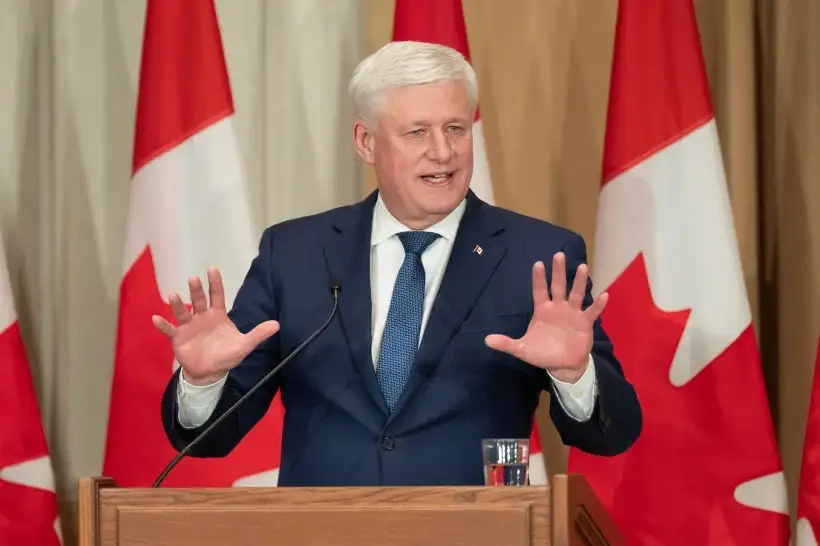
Harper Issues Stark Warning on Canadian Sovereignty
Former Prime Minister Stephen Harper delivered one of his most forceful public warnings in years, arguing that Canada must be prepared to make “any sacrifice necessary” to preserve its independence from the United States. Speaking in the context of rising geopolitical instability and shifting U.S. policy priorities, Harper emphasized that sovereignty cannot be taken for granted simply because of longstanding alliances. He warned that excessive reliance on a single dominant partner risks eroding Canada’s ability to make autonomous decisions in moments of crisis. Harper framed independence not as opposition to cooperation, but as the capacity to act freely in Canada’s own national interest. He argued that political alignment should never translate into structural dependence, particularly in areas such as trade, energy, defense, and industrial supply chains. According to Harper, Canada’s prosperity over decades has been intertwined with the United States, but that success has also produced vulnerabilities that policymakers can no longer ignore. The former prime minister noted that global power balances are shifting rapidly, with economic nationalism, supply-chain weaponization, and strategic competition reshaping international relations. In such an environment, Harper said, Canada must reassess assumptions that economic integration automatically ensures security. He cautioned that even friendly nations prioritize their own interests when circumstances change, making diversification and resilience essential components of sovereignty. Harper’s comments were notable for their blunt tone, signaling a departure from more cautious diplomatic language typically used when discussing Canada–U.S. relations. By invoking sacrifice, he underscored his belief that independence comes with tangible costs, but warned that failing to bear those costs could ultimately result in diminished national control and strategic vulnerability.
Harper argued that Canadians must confront an uncomfortable reality: maintaining independence may require accepting slower growth, higher costs, or reduced access to certain markets in the short term. He suggested that true sovereignty is incompatible with absolute economic convenience, particularly when that convenience is tied to dependence on a single external power. According to Harper, nations that prioritize comfort over autonomy eventually lose both. He highlighted trade diversification as a central pillar of independence, urging Canada to deepen economic relationships beyond North America. While acknowledging that the U.S. will remain Canada’s most important partner, Harper said overconcentration limits bargaining power and increases exposure to external policy shifts. Tariff disputes, regulatory changes, and domestic political pressures in the U.S., he noted, can all have outsized effects on the Canadian economy. Harper also pointed to industrial capacity as a measure of independence. He warned that outsourcing critical production — from energy infrastructure to advanced manufacturing — weakens national resilience. In times of crisis, countries that lack domestic capabilities may find themselves unable to respond effectively or forced to accept unfavorable terms. While Harper did not advocate disengagement from the United States, he stressed that partnership should be balanced, not asymmetrical. Independence, he argued, is not isolationism but preparedness — the ability to sustain national priorities even when alliances are strained or global conditions deteriorate.
Economic Resilience as a Foundation of Independence
A central theme of Harper’s remarks was economic resilience. He argued that Canada’s long-term independence depends on strengthening domestic industries and reducing vulnerability to external shocks. Energy security featured prominently in his analysis, with Harper emphasizing that nations unable to control their own energy production risk losing leverage over both domestic policy and foreign relations. Harper suggested that Canada must be willing to invest heavily in infrastructure, advanced manufacturing, and resource development, even when such investments face political resistance. He argued that environmental, economic, and sovereignty considerations must be balanced rather than treated as mutually exclusive. According to Harper, abandoning domestic capacity in favor of imports may satisfy short-term political goals but undermines long-term national strength. He also emphasized the importance of supply-chain security, noting that recent global disruptions exposed how dependent many advanced economies have become on fragile international networks. Harper argued that rebuilding strategic capacity at home may require government intervention, incentives, and policy shifts that challenge prevailing economic orthodoxy. Ultimately, Harper framed economic independence as inseparable from political independence. Without the ability to sustain itself materially, he warned, Canada risks becoming reactive rather than strategic — adapting to decisions made elsewhere instead of shaping its own future.
Defense, Security, and Strategic Autonomy
Beyond economics, Harper stressed that defense and security are critical to preserving sovereignty. He argued that reliance on allies for security guarantees, while beneficial, should not substitute for robust national capability. Canada’s geographic position, he said, demands serious investment in defense infrastructure, intelligence, and cyber resilience. Harper suggested that a credible defense posture strengthens diplomatic standing, allowing Canada to engage allies from a position of confidence rather than dependency. He warned that underinvestment in security leaves nations exposed to coercion, even from partners who do not intend harm. The former prime minister also highlighted emerging threats, including cyber warfare, economic coercion, and information operations. These challenges, he said, blur traditional distinctions between domestic and foreign policy, making independence harder to maintain without coordinated national strategy. By linking defense readiness to sovereignty, Harper reinforced his broader argument that independence is multidimensional — economic, political, and strategic — and requires sustained commitment across governments and generations.
Political Reactions and Policy Debate
Harper’s comments immediately sparked debate among Canadian policymakers, economists, and analysts. Supporters praised his willingness to articulate uncomfortable truths about dependence and sovereignty, arguing that Canada must think more strategically in an unpredictable world. They contend that diversification and resilience are prudent responses to geopolitical uncertainty. Critics, however, warned that Harper’s framing risks overstating the dangers of close integration with the United States. Some economists argued that deeper diversification could impose significant costs on Canadian consumers and businesses, potentially reducing competitiveness. Others cautioned that distancing rhetoric could strain diplomatic relations. The debate reflects long-standing tension in Canadian policy between economic integration and national autonomy. Harper’s intervention has reopened that discussion, forcing leaders to reassess assumptions that have guided decades of policy. Regardless of position, observers agree that Harper’s remarks resonate at a time when global alliances are being tested and economic nationalism is rising worldwide.
Canada’s Place in a Shifting Global Order
Harper situated his argument within a broader transformation of the international system. He noted that globalization, once assumed to be irreversible, is fragmenting under pressure from strategic competition and domestic political change. In this environment, middle powers like Canada face heightened risk if they lack flexibility and autonomy. He argued that Canada must adapt by strengthening ties with a wider range of partners while preserving the capacity to act independently. Multilateral engagement, Harper said, should complement — not replace — national strength. The former prime minister emphasized that independence does not mean neutrality or disengagement, but rather credibility. Countries that can sustain themselves command greater respect and influence. In Harper’s view, sovereignty is not a relic of the past but a prerequisite for meaningful participation in the future global order.
Public reaction to Harper’s remarks has been mixed, reflecting Canada’s diverse perspectives on identity, economics, and foreign policy. Some Canadians welcomed the emphasis on independence as a reaffirmation of national self-confidence. Others expressed concern that the language of sacrifice could justify austerity or economic disruption. The discussion has extended beyond politics into academic and business circles, where questions about resilience and diversification are increasingly central. Harper’s comments have accelerated that conversation, pushing it into the mainstream. As global uncertainty continues, the issue of sovereignty is likely to remain prominent. Harper’s intervention ensures that independence will be a defining theme in Canada’s strategic debates. Whether policymakers embrace or resist his framing, the questions he raised are unlikely to fade.
In the end, Harper’s message was less about the United States than about Canada itself. He challenged the country to define what independence truly means in a complex, interconnected world. Sacrifice, he argued, is not a failure but a choice — one that reflects national priorities. The cost of independence may be measurable, but the cost of losing it, Harper warned, is immeasurable. As Canada navigates an era of global transition, the balance between cooperation and autonomy will shape its future. Harper’s remarks ensure that this balance will remain at the center of national conversation.
Leave a Comment
Your email address will not be published. Required fields are marked *