Global Trade & Geopolitics
Hong Kong Firm Begins Arbitration Proceedings Over Ruling Against Its Panama Canal Port Contract
Hong Kong’s CK Hutchison Holdings has launched international arbitration proceedings against Panama after the country’s Supreme Court voided its long-standing Panama Canal port concession, escalating a dispute with major commercial, legal and geopolitical implications.

Background of the Panama Canal Ports Dispute
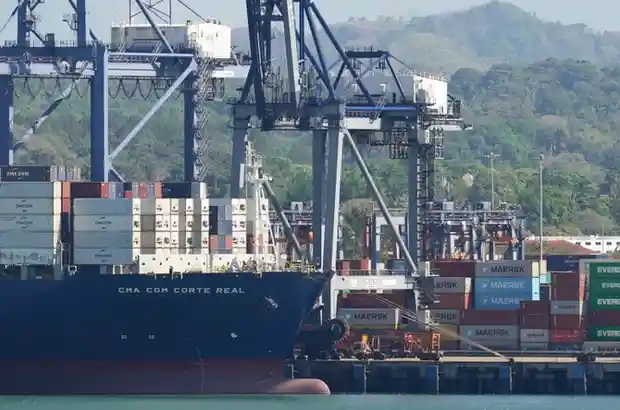
The dispute centers on a decades-long concession held by Panama Ports Company S.A., a subsidiary of Hong Kong-based conglomerate CK Hutchison Holdings, granting it the right to operate the Balboa and Cristóbal port terminals located at opposite ends of the Panama Canal. These terminals serve as critical logistics hubs linking the Atlantic and Pacific oceans and play a central role in global shipping routes that handle billions of dollars in trade annually. CK Hutchison first secured the concession in the late 1990s as part of Panama’s broader effort to modernize port infrastructure following the transfer of the canal from U.S. to Panamanian control. Over the years, the company invested heavily in port upgrades, expanded container handling capacity, and positioned the terminals as competitive transshipment centers for global shipping lines. The concession was renewed and amended several times, reinforcing the firm’s long-term commercial presence. However, Panama’s Supreme Court recently ruled that the concession contracts were unconstitutional, citing provisions related to exclusive operating rights, tax exemptions, and procedural irregularities during approval. The ruling effectively nullified nearly three decades of contractual rights, raising concerns among international investors about legal stability and contract sanctity in Panama. The court decision followed growing domestic political pressure, with critics arguing that the original agreements disproportionately favored foreign operators and deprived the state of revenue. Supporters of the ruling framed it as a necessary assertion of national sovereignty and constitutional integrity. For CK Hutchison, the ruling represented a sudden and far-reaching disruption to its operations in one of the world’s most strategically important trade corridors. The decision also injected uncertainty into broader commercial plans tied to the ports, setting the stage for a prolonged legal and diplomatic confrontation.
Arbitration Proceedings Initiated
In response to the Supreme Court ruling, CK Hutchison announced that its subsidiary Panama Ports Company had formally initiated international arbitration proceedings against the Republic of Panama. The case is being brought under internationally recognized arbitration mechanisms, reflecting the company’s intent to seek neutral legal resolution outside Panama’s domestic courts. The firm said it strongly disagrees with the constitutional ruling and believes Panama breached its contractual and legal obligations under the concession agreement. Arbitration allows CK Hutchison to pursue claims related to lost revenues, asset value impairment, and potential damages arising from what it views as unlawful termination. International arbitration cases involving sovereign states are often lengthy and complex, requiring extensive documentation, expert testimony, and legal interpretation of contract law and international investment protections. While arbitration does not automatically reverse domestic court rulings, it can result in financial compensation or negotiated settlements. CK Hutchison emphasized that arbitration was necessary to safeguard investor confidence and uphold the principle that long-term infrastructure investments must be protected by enforceable legal frameworks. The company also signaled that it remains open to dialogue with Panamanian authorities while pursuing its legal options. For Panama, the arbitration introduces financial and reputational risk. An adverse ruling could expose the government to significant compensation claims and complicate future foreign investment efforts. As a result, the case is being closely watched by multinational corporations operating in emerging markets worldwide.
Geopolitical and Commercial Implications
Beyond its legal dimensions, the dispute carries major geopolitical implications due to the Panama Canal’s central role in global commerce and strategic competition. The canal is a vital artery for international trade, particularly for shipments between Asia and the Americas, making any controversy involving its infrastructure politically sensitive. The arbitration comes amid heightened scrutiny of foreign involvement in critical infrastructure, especially assets linked to Chinese or Hong Kong-based firms. Although CK Hutchison is a private multinational company, its origins have placed it within broader geopolitical narratives surrounding China’s global economic footprint. The legal uncertainty has also complicated CK Hutchison’s reported plan to sell a large portfolio of ports worldwide, including the Panama terminals, as part of a multibillion-dollar transaction involving Western investors. Analysts say unresolved arbitration could affect deal valuation, financing arrangements, and regulatory approvals. Shipping companies and logistics operators are monitoring the situation closely, as operational disruptions or ownership changes could alter regional trade flows. While port operations continue for now, prolonged uncertainty may influence future investment decisions and long-term planning. The dispute illustrates how commercial contracts tied to strategic infrastructure can quickly become entangled in geopolitical tensions, underscoring the intersection of law, commerce, and international relations.
International and Diplomatic Reactions
The ruling and subsequent arbitration have triggered strong international reactions, particularly from China, which has criticized Panama’s court decision as unjust and politically motivated. Chinese officials warned that the treatment of Chinese-linked enterprises abroad could affect bilateral relations and economic cooperation. Panama’s government, however, has defended the ruling, emphasizing judicial independence and constitutional authority. Officials stressed that the decision was made by the courts, not the executive branch, and reflects domestic legal interpretation rather than foreign policy considerations. In the United States, some lawmakers welcomed the ruling, viewing it as consistent with efforts to limit foreign influence over critical infrastructure near major global chokepoints. These responses highlight how infrastructure disputes increasingly intersect with national security concerns. International business groups expressed concern over the precedent set by the annulment of long-standing contracts, warning that such actions could undermine investor confidence. Legal analysts noted that the case may influence how future infrastructure agreements are structured, with greater emphasis on arbitration clauses and political risk mitigation. The divergent reactions underscore the delicate balance Panama faces in asserting sovereignty while maintaining its reputation as a stable hub for global trade and investment.
What’s Next in the Legal Fight
As arbitration proceedings move forward, both CK Hutchison and the Panamanian government are preparing for a prolonged legal battle that could stretch over several years. Arbitration panels will assess whether Panama violated contractual or international investment obligations and determine what remedies, if any, are appropriate. Possible outcomes range from financial compensation to negotiated settlements, though enforcement of arbitration awards against sovereign states can be complex. Even if CK Hutchison prevails, translating a legal victory into practical relief may require further negotiation. In the meantime, port operations at Balboa and Cristóbal are expected to continue under interim arrangements, minimizing immediate disruption to canal traffic. However, uncertainty over long-term ownership and management could affect future investment decisions. The case serves as a high-profile example of how infrastructure, law, and geopolitics increasingly intersect in a globalized economy. Its outcome will likely influence how multinational companies assess risk when investing in strategic assets governed by domestic political considerations. For now, the arbitration marks a significant escalation in a dispute that extends far beyond Panama’s borders, with implications for global trade governance, investor protections, and the evolving balance between national sovereignty and international commerce.
Leave a Comment
Your email address will not be published. Required fields are marked *