Global Diplomacy
Trump and Xi Discuss Iran in Wide-Ranging Call as US Presses China to Break From Tehran
U.S. President Donald Trump and Chinese President Xi Jinping held a wide-ranging phone call that addressed Iran, trade, Taiwan, and future diplomatic engagement, as Washington urges Beijing to distance itself from Tehran amid rising geopolitical tensions.

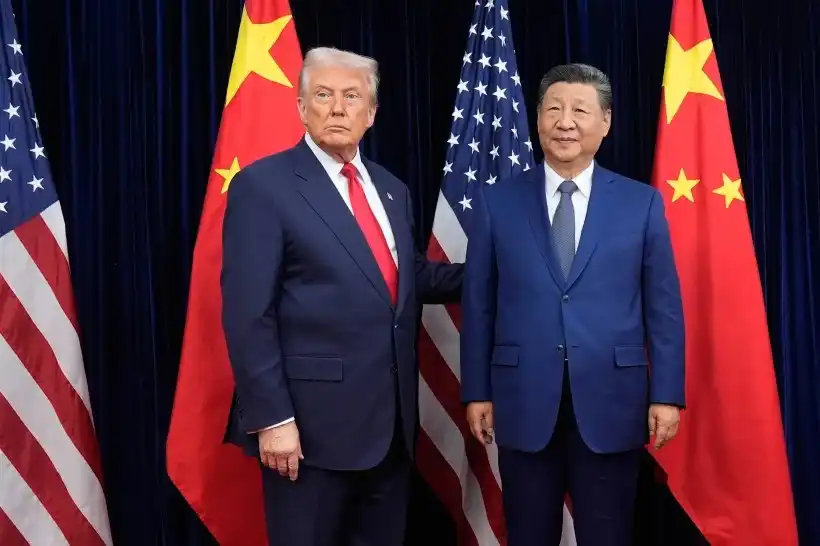
Trump and Xi Address Iran Amid Global Tensions
President Donald Trump confirmed that Iran was a central topic during a wide-ranging phone conversation with Chinese President Xi Jinping, reflecting Washington’s growing effort to enlist global powers in isolating Tehran. The discussion took place against a backdrop of escalating concern over Iran’s nuclear program, regional activity, and internal political repression. According to U.S. officials, Trump emphasized the need for coordinated international pressure to constrain Iran’s strategic ambitions and limit its access to economic and diplomatic lifelines. The call underscored the complexity of U.S.–China relations, in which cooperation on specific global challenges coexists with deep strategic rivalry. Iran represents one of the few areas where Washington believes Beijing could play a decisive role, given China’s economic ties and diplomatic engagement with Tehran. Trump’s remarks suggested an effort to frame Iran not only as a U.S. concern but as a broader threat to international stability. Beyond Iran, the leaders also discussed trade relations, regional security, and diplomatic engagement, highlighting the breadth of issues shaping bilateral ties. The call reflected a mutual recognition that dialogue remains necessary even as tensions persist. Analysts noted that such conversations serve both symbolic and practical purposes, signaling openness to engagement while testing the limits of cooperation. The exchange comes at a time when global power centers are recalibrating alliances and strategies amid mounting geopolitical uncertainty, making communication between Washington and Beijing particularly consequential.
Trump characterized his relationship with Xi as constructive, describing their dialogue as candid despite disagreements. He reiterated the importance of maintaining open lines of communication between the world’s two largest economies, even as disputes over security, trade practices, and geopolitical influence continue to shape the relationship. The Chinese government’s readout of the call placed emphasis on overall bilateral stability and long-term cooperation, while omitting certain details highlighted by U.S. officials. Such differences in messaging are common in high-level diplomacy and reflect each side’s priorities and domestic audiences. Trump also raised the prospect of a future visit to Beijing, framing it as part of broader efforts to manage competition through engagement. Chinese officials acknowledged discussions about future summits, reinforcing the idea that diplomacy remains active despite persistent tensions. Observers noted that the call reflects a shared understanding that miscalculation carries significant risks, particularly as global conflicts and economic uncertainty intensify.
Washington Presses China to Distance Itself From Tehran
The conversation occurred as the United States intensifies pressure on China and other nations to scale back engagement with Iran. U.S. officials argue that Tehran’s actions — including nuclear development and internal crackdowns — warrant broader international isolation. Washington has increasingly framed cooperation with Iran as incompatible with global security responsibilities. China remains one of Iran’s most significant economic partners, particularly in energy trade. This relationship places Beijing at the center of U.S. diplomatic efforts to curb Tehran’s influence. Trump’s administration has explored a range of tools, including trade measures, to discourage countries from maintaining close economic ties with Iran. Analysts say persuading China to significantly alter its relationship with Iran would represent a major diplomatic shift. Beijing has traditionally opposed unilateral sanctions and emphasized dialogue over pressure. However, U.S. officials believe that highlighting shared interests in regional stability could create openings for limited cooperation. The call suggests Washington is testing whether strategic dialogue with Beijing can yield tangible changes in China’s approach to Iran.
China Reaffirms Core Positions on Taiwan and Sovereignty
While Iran featured prominently, Chinese officials used the call to reiterate longstanding positions on Taiwan and national sovereignty. Beijing has consistently emphasized that Taiwan remains a core interest and has warned against actions it perceives as external interference. These reaffirmations reflect China’s broader strategy of linking cooperation on global issues with respect for its territorial claims. Analysts note that Beijing often uses such dialogues to remind Washington that engagement on one front does not imply concessions on another. The call also touched on economic issues, with both sides acknowledging the importance of trade stability. Despite ongoing disputes, neither government signaled a desire for escalation, reinforcing the view that economic interdependence continues to temper confrontation. The combination of cooperation and firm messaging illustrates the delicate balancing act defining U.S.–China relations.
Managing Competition Through Diplomatic Engagement
Experts view the Trump–Xi call as part of a broader effort to manage strategic competition without allowing it to spiral into open confrontation. Regular leader-level communication is seen as a stabilizing mechanism, particularly during periods of heightened global tension. Iran’s inclusion in the discussion demonstrates how regional conflicts increasingly intersect with great-power politics. Washington’s push for broader isolation of Tehran intersects with Beijing’s interests in energy security and regional influence, making compromise difficult but dialogue necessary. The call also highlights the evolving nature of diplomacy, where economic leverage, security concerns, and political messaging are tightly intertwined. Analysts note that both leaders are navigating domestic pressures while attempting to project strength internationally. Such conversations, while unlikely to produce immediate breakthroughs, are viewed as essential for preventing miscalculation and preserving limited cooperation.
Implications for Middle East and Global Stability
The focus on Iran carries implications beyond U.S.–China relations. Middle Eastern stability, global energy markets, and nonproliferation efforts are all influenced by how major powers engage with Tehran. Washington’s strategy relies on multilateral pressure to influence Iranian behavior, while Beijing’s approach emphasizes engagement and economic ties. The tension between these strategies reflects broader disagreements about how to manage international security challenges. Analysts warn that failure to align approaches could weaken global efforts to address Iran’s nuclear ambitions. At the same time, excessive pressure risks escalation. The Trump–Xi dialogue suggests both sides recognize the stakes, even if their strategies diverge.
Reaction to the call has been closely watched by allies and rivals alike. U.S. partners are assessing whether Washington can persuade Beijing to adjust its stance on Iran, while regional actors are evaluating the potential impact on diplomatic dynamics. The conversation reinforces the reality that global crises increasingly require engagement between competing powers. Even limited coordination can shape outcomes. For now, the call signals continued dialogue rather than resolution. Whether it leads to concrete policy shifts remains uncertain. What is clear is that communication remains a central tool in managing an increasingly complex global landscape.
As geopolitical tensions persist, interactions between Trump and Xi are likely to remain pivotal. Iran represents just one of many issues testing the capacity of the world’s leading powers to cooperate amid rivalry. The balance between pressure and engagement will continue to define Washington’s approach to Beijing, and vice versa. While outcomes may be incremental, sustained dialogue reduces the risk of misunderstanding. In an era of strategic competition, even cautious communication carries significant weight.
Leave a Comment
Your email address will not be published. Required fields are marked *