Monetary Policy
Kevin Warsh Faces Inflation Pressure as Fed Chair
Kevin Warsh began his term as Federal Reserve chair as inflation, oil prices, and interest-rate uncertainty pressure the economy.
The Senate Confirms Warsh — And the Economy Immediately Tells Him the Job Will Be Hard
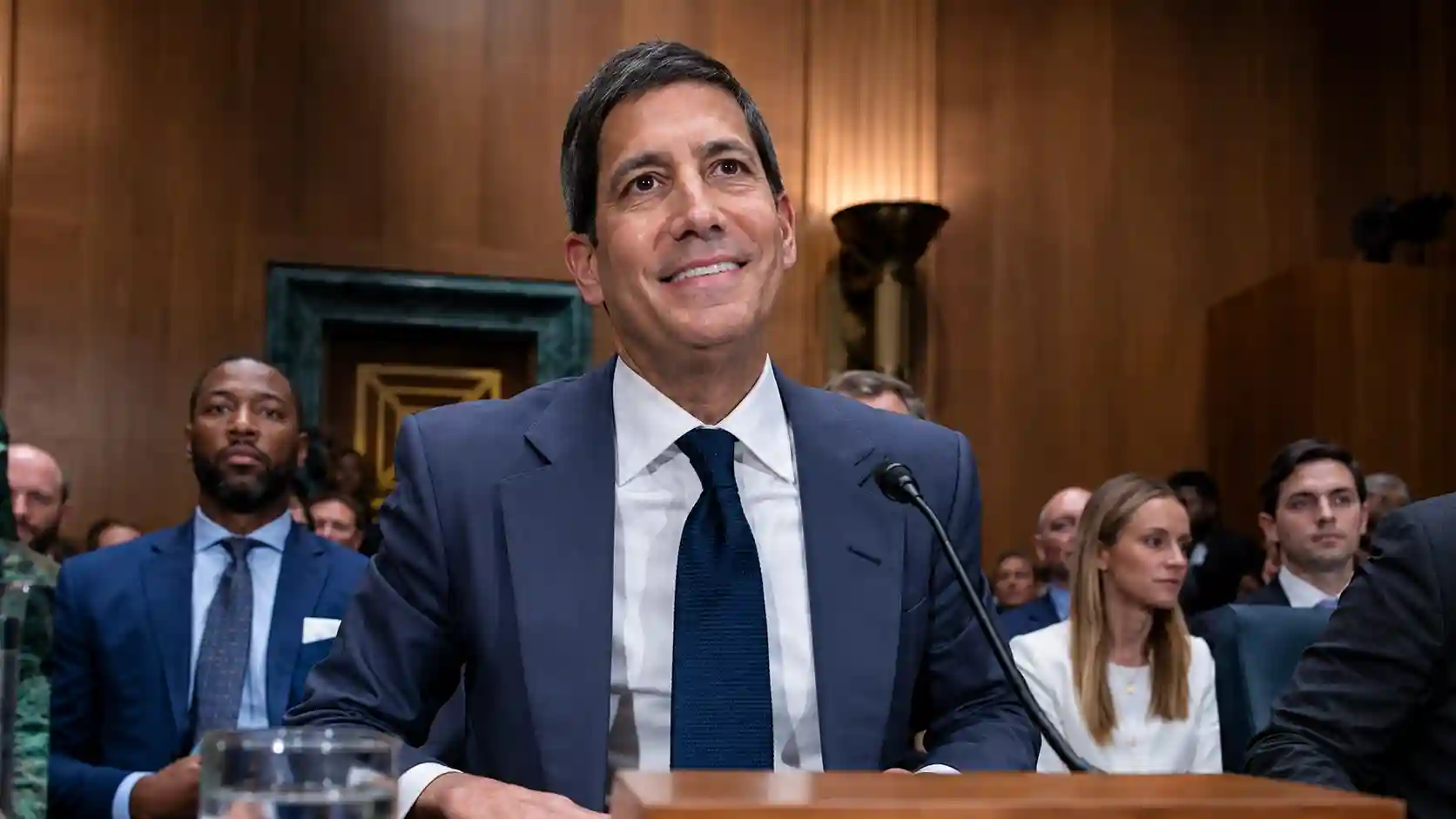
Kevin Warsh did not get a soft landing into his new job. The Senate confirmed him on May 13 in a 54-45 vote — the most divided confirmation in Federal Reserve history — and within 48 hours of the vote, the U.S. economy handed him a stack of data that made the path ahead unmistakably complicated. Wholesale prices surged 6% in April, the hottest Producer Price Index reading in nearly four years. Consumer prices are running at 3.8% year over year through April, the fastest annual rate since May 2023. Retail sales data released Thursday of the same week showed consumers beginning to pull back, making more cautious decisions on non-essential spending. Gas prices in Los Angeles crossed $6 a gallon. The national average is approaching $4.50. Warsh, a 56-year-old Stanford- and Harvard-educated former investment banker who served on the Fed's Board of Governors from 2006 to 2011, was nominated by President Trump in part to satisfy the White House's long-standing desire for lower borrowing costs. Trump spent the better part of two years publicly pressuring Jerome Powell to cut rates — pressure that Powell resisted, citing inflation data. That pressure campaign eventually escalated to the point where the Justice Department launched a criminal investigation into the Fed's office renovation costs. Powell, determined not to leave under that cloud, announced he would remain on the board as a rank-and-file governor after his chairmanship ended. The result is a situation that has no modern precedent: the new chair will lead his first Federal Open Market Committee meeting in June while his predecessor sits at the same table with a full vote on interest rates. Powell has publicly promised to keep a low profile. He told reporters at his last press conference as chair on April 29 that there is only ever one chair, and that when Warsh is sworn in, he is that chair. But Powell is a 14-year veteran of the institution, a former chair who enjoyed a 44% Gallup approval rating by late 2025 — the highest of any U.S. leader at the time — and he will have a vote on every rate decision going forward. Whether that vote is ever a tiebreaker remains to be seen, but the dynamic is unlike anything the Fed has navigated before.
What Warsh Actually Believes — and Why It Matters Right Now
Warsh's views on monetary policy are documented and substantive, and they create a specific tension with the economic environment he is inheriting. During his confirmation hearing before the Senate Banking Committee on April 21, he said the U.S. economy is still working through inflation ripples from the pandemic era and that the Fed needs a different framework for measuring price pressure. He argued that the Fed's preferred gauge — the Personal Consumption Expenditures price index — is too blunt an instrument, particularly when food and energy volatility distorts the reading. He favors trimmed mean and median inflation measures that remove statistical outliers from the headline. Based on those alternative measures, Warsh told senators the underlying trend of inflation looks quite favorable. Christian Floro, market strategist at Principal Asset Management, described Warsh as less concerned about inflation persistence than many current Fed officials — which, in today's environment, is a meaningful philosophical difference from the hawks on the FOMC. At least three current committee members have signaled publicly that the next rate move could just as easily be an increase as a cut. Warsh also expressed interest in changing how the Fed communicates with the public. Jerome Powell continued and deepened Ben Bernanke's commitment to transparency — regular press conferences, public speeches by governors and regional presidents, and structured forward guidance. Warsh has described a preference for messier meetings, where internal disagreement leads to better decisions, and for less public communication overall. Morgan Stanley flagged in its May 12 midyear outlook that a Warsh-led Fed may adopt more restrained public communication, potentially creating more short-term policy uncertainty for markets that have been conditioned to read every Fed statement carefully for signals. On the balance sheet, Warsh has long been a critic of the Fed's bond-buying programs, which were expanded dramatically during the COVID-19 crisis and left the central bank holding trillions of dollars in government debt. He is expected to push for a leaner Fed operation, though any balance sheet changes would require committee consensus and move slowly by institutional design.
The Rate Question: What Warsh Wants vs. What the Data Allows
The core tension in Warsh's chairmanship, at least in its early months, is the gap between what the White House wants from him and what the inflation data currently permits. Trump has been explicit and consistent: he wants lower interest rates. He installed Warsh with that mandate. Warsh himself, before the Iran war drove oil above $100 a barrel in late February, had been publicly supportive of the argument that there was room to ease rates. That calculus changed fast. CME FedWatch data as of May 15 showed traders pricing the probability of a rate hike sometime in 2026 at 45% — a number that stood at roughly 1% just a month earlier. At the April FOMC meeting, three members of the committee signaled their next move could be upward rather than downward. The April CPI reading of 3.8% year over year is not data that supports a case for rate cuts. Neither is a PPI reading of 6%. And the oil shock driving both numbers has not resolved — the Strait of Hormuz situation remains unresolved, the U.S. is maintaining a naval presence, and OPEC+ production cuts were in place before the conflict started. Most major forecasters now expect Warsh to hold rates steady through the end of 2026. Morgan Stanley projects the fed funds rate stays in the current 3.50% to 3.75% range until 2027, at which point the bank expects 50 basis points of cuts in March and June. J.P. Morgan's strategists hold a similar base case. The bar for rate cuts has risen, in the words of the Morgan Stanley report, published three days after Warsh's confirmation. That is a polite way of saying the new chair walked into a room where the tool he was hired to use is the one the data says he probably should not touch.
The Committee Warsh Is Inheriting Is Not Unified
One of the subtler challenges Warsh faces is that the Federal Open Market Committee he now leads is structurally divided — not just philosophically, but in terms of who appointed each member and what those members believe. As of his confirmation, three of the seven Fed governors are Trump appointees, including Warsh. Three others were appointed by President Biden. The seventh seat belongs to Powell, who was originally named to the board during the Obama administration and made chair in Trump's first term. The FOMC's remaining five seats rotate among the 12 regional Federal Reserve bank presidents — officials who are hired by regional bank boards, not by the White House, and who are institutionally insulated from political pressure. The New York Fed's president always has a vote. The other four rotate annually. That structure means Trump appointees currently hold a quarter of the committee's seats. There is no bloc that will automatically deliver Warsh a majority for any policy direction. Randall Kroszner, a former Fed governor who served alongside Warsh from 2006 to 2009, described the dynamic plainly: the chair has the power to persuade, and is in a strong position to do so, but still needs to persuade. Warsh will need to build consensus one meeting at a time. If his first FOMC meeting in June produces vocal dissents — which he himself has said he welcomes as part of a healthier debate culture — markets will have to recalibrate their understanding of how predictably this committee moves.
What the Transition Means for Businesses and Investors
For American businesses carrying debt at current rates, the transition from Powell to Warsh does not by itself change the math. Rates are where they are, and the economic forces keeping them there — energy-driven inflation, geopolitical uncertainty, a labor market that has softened but not broken — are not policy variables that a new chair can immediately influence. Small and mid-sized businesses dependent on floating-rate bank loans are still paying more to borrow than at any point since the post-2008 decade of near-zero rates. That constraint on capital access does not shift because a new name sits in the chairman's office. For investors, the Warsh transition introduces a different kind of uncertainty that did not exist under Powell: communication uncertainty. Markets have spent eight years learning to parse Powell's language for policy signals. That interpretive muscle memory is now somewhat less useful. If Warsh follows through on his stated preference for less public guidance and messier internal deliberations, the period between FOMC meetings may carry more genuine uncertainty than it has in recent years. That is not catastrophically bad for markets, but it is a change in the information environment that traders and portfolio managers will need to account for. J.P. Morgan's Chase strategists said explicitly that a leadership change at the Fed is not a reason to overhaul investment portfolios. The structural forces shaping the 2026 rate outlook — elevated inflation, an unresolved energy shock, and a Fed that needs to see data move before it can act — are bigger than any individual chair's preferences. Warsh's first real test will be the June meeting, when he presides over his first rate decision as chair and sets the tone for how his committee communicates whatever it decides.
Kevin Warsh takes over the Federal Reserve at one of the more genuinely complicated inflection points in the institution's recent history. He was nominated to lower rates. The data, at the moment of his swearing-in, is pointing in the other direction. He wants a less talkative Fed. Markets are accustomed to constant signals. He wants productive internal disagreement. He has a predecessor on the board who has publicly vowed to support him but carries a vote and institutional authority that no former chair in the modern Fed era has retained in quite this way. None of those tensions make Warsh's chairmanship impossible. They make it interesting in ways that matter for anyone watching U.S. monetary policy in the back half of 2026 and into 2027. The June meeting will tell a lot — not necessarily about what rate decision the FOMC makes, but about how Warsh runs a meeting, how dissenters are handled, and whether his communication style gives markets more or less to work with than they are used to. That first meeting is six weeks away. Between now and then, every inflation reading, every oil price movement, and every signal from the Strait of Hormuz will land on a Fed that is simultaneously processing a new chair, a divided committee, and an economy that is not cooperating with the rate trajectory the White House hired Warsh to deliver.
Leave a Comment
Your email address will not be published. Required fields are marked *