Business Investment
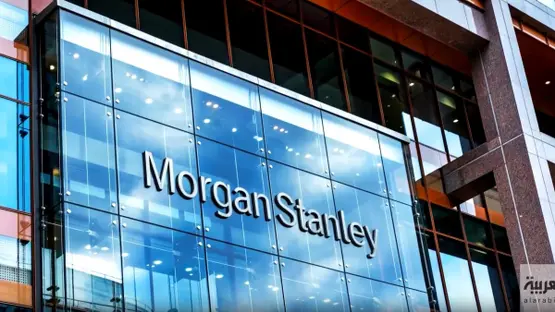
Morgan Stanley Sees AI Investment Driving U.S. Economy
Morgan Stanley said AI investment and corporate spending are driving the U.S. economy while consumer spending slows.

Four Words That Tell the Story of the U.S. Economy Right Now
Morgan Stanley published its midyear U.S. economic outlook on May 12, 2026, and the title the bank chose for its report — four words, no qualifier — is designed to be noticed. The report is called Capex Over Consumption. Chief U.S. Economist Michael Gapen and his team are not projecting a recession. Their base case calls for real GDP growth of 2.3% in 2026 and 2.6% in 2027. But the framing of the title is the substance of the report: the American economy is not running on broad-based strength. It is running on corporate investment in artificial intelligence infrastructure, and the consumer side of the economy — which historically drives the majority of U.S. growth — is losing momentum in ways that have not yet fully shown up in the headline numbers. This is not a subtle analytical distinction. It is a structural observation about where the weight of economic activity is sitting right now and where the risks lie if one of those two legs weakens. Corporate AI spending is performing at a pace that would have seemed extraordinary even three years ago. The five dominant hyperscalers — Amazon, Alphabet, Meta, Microsoft, and Oracle — are on track to deploy approximately $805 billion in capital investment in 2026. That figure is projected to surpass $1 trillion in 2027. Morgan Stanley categorizes that spending as structural rather than cyclical, meaning it is not expected to be meaningfully interrupted by oil price swings or consumer confidence readings. But the consumer side of the equation is sending different signals, and the report walks through each of them in detail.
The Consumer Is Losing Ground — Here Is Exactly How
Morgan Stanley's forecast for real consumer spending growth is 1.8% in 2026, down from 2.1% in 2025. That is a modest deceleration on paper, but the report identifies several specific mechanisms driving the pullback that make the number feel more concerning than it appears at the top level. The most specific data point in the entire report is the finding around the One Big Beautiful Bill Act — the sweeping tax and spending legislation the Trump administration passed earlier this year. The average American household received approximately $320 in additional tax refunds from the legislation, representing a 17% annual increase in the average refund. Under normal circumstances, that kind of tax benefit would be a visible boost to household spending power. But Morgan Stanley's analysis shows that $320 benefit is completely neutralized if retail gasoline prices average just $3.60 per gallon. The national average right now is approaching $4.50. The tax cut, in effect, was already canceled at the pump before most households even noticed the extra money in their refund. Real labor income is expected to rise just 0.8% in 2026 — a narrow figure that gives households very little cushion against sustained price pressure. Real disposable income growth is projected at 1.2%, slightly better but still thin by historical standards. The weakness, Morgan Stanley is careful to note, is concentrated in lower and middle-income households, which spend a disproportionately large share of their budgets on energy. The report states plainly that the focus is back on the upper-income consumer — the top 20% of earners who hold more than 70% of household net worth and nearly 90% of all corporate equities. That group is largely insulated from gas price shocks by their asset ownership and income diversity. The bottom 80% is not.
AI Investment Is the Economy's Main Load-Bearing Wall Right Now
Against that softening consumer backdrop, corporate AI capital spending is doing something the report describes as genuinely unusual: it is holding the broader investment side of the economy upright during a period of geopolitical disruption and consumer retrenchment. Morgan Stanley forecasts nonresidential business fixed investment growth of 7.0% in 2026, accelerating to 8.0% in 2027. In a single quarter — the first quarter of 2026 — AI-driven investment accounted for roughly half of total U.S. GDP growth, according to U.S. Treasury data. During 2025, AI-driven spending accounted for over a third of GDP growth. The productivity gains that investment is generating are starting to show up in the data: industries with high AI adoption contributed 1.7 percentage points to the 2.4% productivity increase in nonfarm businesses during 2025. Why does this matter for the broader economy? Because productivity growth is the mechanism through which corporate investment eventually benefits workers and consumers downstream — through better margins, higher wages, and lower prices. Morgan Stanley's assessment is that AI-related job displacement has elevated the unemployment rate by no more than 0.1 percentage point, a finding that is considerably more contained than the more alarming projections that circulated during earlier debates about automation. But the productivity gains from AI adoption, for now, are accruing primarily to the firms and shareholders doing the investing — which is the same top 20% that holds most of the equity wealth. The bottom half of the income distribution is, as one economist cited in a recent Fortune analysis put it, having to use debt because they are not making it paycheck to paycheck.
The Oil Shock Is This Economy's Fourth Major Supply Disruption in Six Years
Morgan Stanley's report frames the current oil shock not as an isolated event but as the fourth major supply disruption to hit the U.S. economy in rapid succession since 2020 — following the COVID-19 pandemic, the Russia-Ukraine war, and the 2025 tariff disruption that pushed the effective U.S. tariff rate from 2.1% to an estimated 11.7% on imports. The accumulation of those shocks is doing something that individual crises rarely accomplish: it is fundamentally reshaping how businesses and households relate to economic uncertainty. Brent crude, which was trading near $70 a barrel in early February, ranged between $90 and $120 per barrel from late February through mid-May following the outbreak of conflict around the Strait of Hormuz. Morgan Stanley's base case assumes oil settles in an $80 to $90 range for the remainder of 2026, predicated on gradual Middle East de-escalation. That assumption is doing significant work in the forecast — the bank explicitly notes that baseline projections are less relevant than normal in the current environment and states it is prepared to revise early and often. The downside scenario in the report is stark: Brent crude surging to $140 to $160 per barrel through supply shortages and additional demand destruction, pushing the global economy into recession. The International Energy Agency's April Oil Market Report projected a Q2 2026 contraction of roughly 1.5 million barrels per day in global oil demand — which would represent the sharpest quarterly decline since the COVID-19 pandemic. Demand destruction spreading in Asia and the Middle East could reduce upward pressure on prices over time, but the timeline is uncertain and the diplomatic standoff has hardened in ways that make a quick resolution harder to price in with confidence.
What the 'Capex Over Consumption' Diagnosis Means for Where the Economy Goes Next
The underlying message of Morgan Stanley's report is that the U.S. economy is in a transitional period that is not like the post-financial-crisis era of easy money and suppressed inflation, and not like the pandemic-era stimulus boom either. The report states that the economy has likely exited the low-inflation, low-interest-rate, loose-monetary-policy backdrop that characterized the decade after 2008. The shift it describes is from a system optimized for efficiency to one optimized for resilience — and that is a fundamentally different operating environment for businesses, consumers, and investors. For the second half of 2026, the practical implications of that diagnosis are specific. Consumer spending is decelerating, not collapsing — and that distinction matters. The economy is not in recession. But the consumer is no longer the reliable growth engine that has powered U.S. expansion for most of the past decade. Corporate investment is filling that role, but it is concentrated in a narrow set of industries and companies. The Conference Board's Leading Economic Index fell 0.6% in March 2026, more than reversing its modest February gain, with weakness in building permits, consumer expectations, and stock price indicators — a reading that signals slowing ahead. On the inflation side, Morgan Stanley projects core PCE at 2.8% for 2026, declining to 2.3% in 2027. Headline PCE is expected to peak at 3.9% in May 2026 before moderating through the second half of the year. The Fed, under new Chair Kevin Warsh, is expected to hold rates steady through the end of 2026, with the first rate cuts pushed to March and June of 2027. That timeline is based on the assumption that the energy shock proves temporary and that underlying inflation continues to moderate at the pace it was on before February's escalation. Neither assumption is guaranteed, and the bank's own language acknowledges that explicitly.
Morgan Stanley's midyear report is a careful piece of analysis that arrives at a conclusion the headline numbers have been obscuring: the U.S. economy is holding up, but it is not holding up evenly. Corporate America is investing at a pace that is genuinely historic. Hyperscaler AI capital expenditure is on a trajectory that will reshape entire industries over the next decade. That is a real and durable source of productive capacity being added to the economy. But real wages are growing at 0.8%. The average household's tax benefit from the year's biggest legislative achievement was erased at the gas station. Consumer confidence hit all-time lows in April even as the S&P 500 touched 7,400 for the first time. That disconnect between what markets are doing and what households are experiencing is not new to this cycle — but it is widening, and the Morgan Stanley report documents the mechanisms behind the widening with unusual precision. For businesses planning around the second half of 2026, the practical takeaway is that the consumer is not an unlimited resource. The spending that has kept corporate revenue growth strong despite high rates and high prices is concentrated in upper-income households, and that concentration is becoming more visible in earnings data. Companies with products and services skewed toward middle and lower income customers are going to face a more difficult demand environment than the aggregate numbers suggest. The economy is not broken, but it is running on an increasingly narrow engine — and that engine has a name: capital expenditure in artificial intelligence infrastructure. Everything else is working harder than the headline data lets on.
Leave a Comment
Your email address will not be published. Required fields are marked *