U.S. Stock Market & Hedge Funds
BAckman Reveals $2.1B Microsoft AI Investment
Pershing Square disclosed a $2.1 billion Microsoft investment tied to Azure, OpenAI, and long-term AI growth.

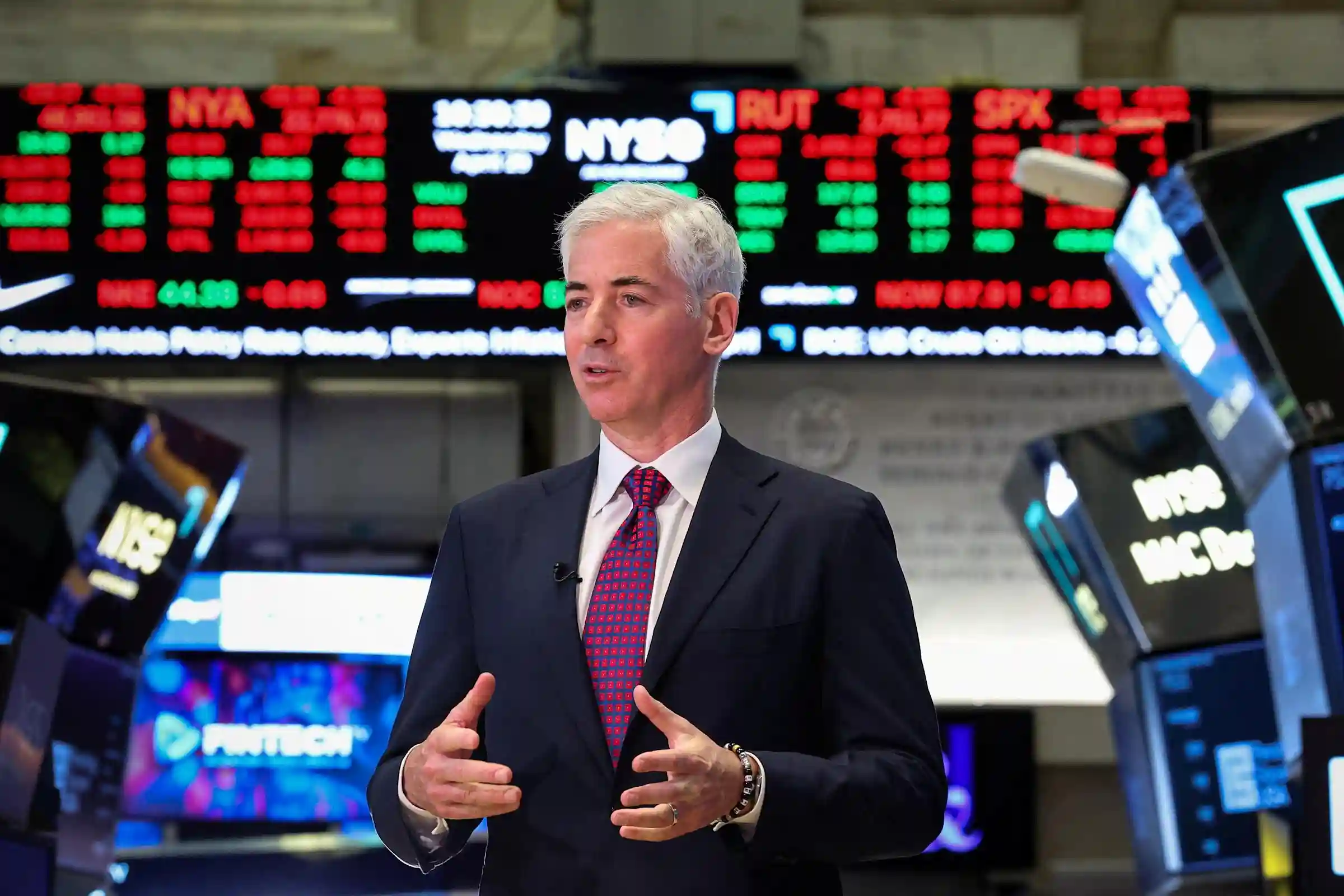
Ackman Goes Public With a Position He Has Been Building for Three Months
Bill Ackman did not whisper this one. On Friday morning, May 15, the founder and CEO of Pershing Square Capital Management posted a detailed explanation on X, announcing that his firm had built a new position in Microsoft Corporation that would appear in its forthcoming quarterly 13F filing with the Securities and Exchange Commission. The disclosure followed his trademark approach: a lengthy, analytical public post that laid out the investment thesis in full before the regulatory filing made the holding official. The position, which Bloomberg later confirmed totals approximately $2.1 billion, makes Microsoft a core holding inside both Pershing Square's flagship hedge fund and PSUS, the closed-end fund Ackman launched for retail investors. The stake amounts to less than a tenth of one percent of Microsoft's total market capitalization, which currently sits around $3 trillion, but the strategic significance of the disclosure goes well beyond the dollar size. When Ackman adds a name to his concentrated portfolio — which typically holds no more than eight to twelve positions at any given time — it signals a conviction call, not a toe-dip. Pershing Square started building the position in February, right after Microsoft's stock fell roughly ten percent in a single session following its fiscal second-quarter earnings report. Investors at the time punished the stock over two concerns: a slight miss in Azure cloud revenue growth relative to analyst expectations, and a massive capital expenditure budget for 2026 that came in far above what Wall Street had been modeling. Ackman entered as others were heading for the exits, accumulating shares at a starting valuation of around 21 times forward earnings — broadly in line with the overall market multiple, and well below where Microsoft has historically traded. 'We were able to establish our position at a valuation of 21 times forward earnings, broadly in line with the market multiple and well below Microsoft's trading average over the last few years,' Ackman wrote in his Friday post. That entry point is the foundation of his entire argument: that the market's reaction to Microsoft's earnings was a mispricing, not a verdict on the business.
The Core of the Thesis: Azure, M365, and a Hidden OpenAI Asset
Ackman's investment case for Microsoft rests on three distinct pillars, each of which he addressed in detail in his public disclosure. The first is Microsoft 365 — the productivity suite that includes Word, Excel, PowerPoint, Teams, and Outlook, used by hundreds of millions of people and embedded into the daily workflows of enterprises across the globe. Ackman argued that investors systematically undervalue the resilience of this franchise. The switching costs are enormous, the pricing power is durable, and the integration of AI tools like Copilot into the M365 suite opens a meaningful incremental revenue channel that has barely begun to show up in the financial results. 'In our view, investors underestimate the resilience of the M365 franchise given its deeply embedded role across enterprises and highly attractive price-value proposition,' he wrote. The second pillar is Azure, Microsoft's cloud infrastructure business and the fastest-growing major division in the company. Ackman pushed back directly on investor concerns about the scale of Microsoft's 2026 capital expenditure program, which management disclosed at $190 billion — approximately 61 percent above 2025 levels and roughly $35 billion higher than Wall Street had modeled before the earnings call. Many investors treated that number as a warning sign about margin compression. Ackman framed it differently: as a J-curve investment in infrastructure that will generate operating leverage over the next several years as Azure capacity fills up and the economics of scale kick in. The third pillar is the one that has received the least attention in analyst coverage: Microsoft's 27 percent economic interest in OpenAI, the most valuable artificial intelligence company in the world. At OpenAI's most recent funding round valuation, that stake is worth approximately $200 billion. Yet that figure is not reflected in Microsoft's current market capitalization, Ackman argued — meaning investors are effectively getting one of the central positions in the AI race for free when they buy Microsoft stock today. Microsoft shares rose roughly one percent in pre-market trading after the disclosure and extended those gains modestly through the morning session before giving back some ground alongside the broader market selloff on Friday afternoon.
Where This Fits in Ackman's Pattern of Big Tech Contrarian Calls
The Microsoft investment follows a pattern that Ackman has been executing consistently since late 2022: stepping into major technology companies during periods of maximum investor skepticism around artificial intelligence spending and competitive positioning, then holding through the recovery as the business results validate his thesis. He made the same call with Alphabet in late 2022, when ChatGPT's launch triggered widespread fear that Google Search was structurally threatened by generative AI. That position proved highly profitable as Alphabet demonstrated that its own AI integration into Search actually strengthened the business rather than disrupting it. He repeated the approach with Amazon in the weeks following Liberation Day earlier this year, when markets sold off sharply on trade policy uncertainty, and more recently with Meta Platforms, where he entered after investors reacted negatively to the company's unexpectedly large capital expenditure guidance — a situation directly parallel to the Microsoft entry point. 'We acquired Alphabet when the stock declined substantially on the release of ChatGPT in late 2022, Amazon in the weeks following Liberation Day, and Meta more recently on the market's response to the company's unexpectedly large capex guidance,' Ackman wrote, connecting the dots himself. The Microsoft investment is a continuation of the same playbook: identify a world-class business being misunderstood by the market on a specific concern, enter at a discount to intrinsic value, and wait for the business results to close the gap. For investors tracking Pershing Square's performance, the disclosure matters because Ackman's public calls carry genuine signaling power. His concentrated approach means every new position reflects deep research and high conviction. His track record on Big Tech contrarian entries over the past three years has been strong, which is exactly why Friday's announcement moved Microsoft stock even before the 13F filing made the holding officially on record.
Market Context: Why Friday's Disclosure Landed in a Complicated Week
Ackman's Microsoft disclosure landed on a Friday that was rough for U.S. equity markets broadly. The S&P 500 ended the day down 1.24 percent at 7,408.50, the Nasdaq Composite fell 1.54 percent to 26,225.14, and the Dow Jones Industrial Average lost 537 points to close at 49,526.17 — giving back a large portion of the gains that had pushed all three indexes to new records just the day before, when the Dow crossed 50,000 for the first time since February. The Friday selloff was driven by two converging forces: profit-taking in technology stocks after a period of extraordinary gains, and a sharp move higher in Treasury yields following the Trump-Xi summit in Beijing, which ended without the major policy breakthroughs that equity investors had been hoping for. The 10-year Treasury yield closed the week at 4.59 percent, its highest level since February 2025, and the 30-year bond briefly traded above five percent — a level that historically puts pressure on equity valuations, particularly in long-duration growth stocks. The technology sector bore the brunt of the selloff. Intel fell more than six percent, Advanced Micro Devices and Micron each dropped over five and six percent respectively, and Nvidia declined 4.4 percent. Microsoft itself gave back gains through the afternoon despite Ackman's disclosure. For investors reading the Pershing Square announcement in that context, the broader market pressure actually reinforces rather than undercuts Ackman's argument. If Microsoft is undervalued at the entry point he established in February, it is arguably more attractively priced after a week in which rising yields and macro uncertainty pushed the stock further from its intrinsic value. Whether that thesis plays out over the next 12 to 24 months will depend on how quickly Azure revenue growth re-accelerates and whether the capital expenditure investment begins to show up in operating margins — the same variables the market is watching most closely.
What the Investment Means for Retail and Institutional Investors Watching Microsoft
The immediate implication for retail investors watching the Microsoft story is that one of the most closely followed hedge fund managers in the United States has done the work and reached a clear conclusion: the stock is cheap relative to the quality of the underlying business. Ackman's public disclosure is unusual in the hedge fund world. Most managers file their 13F reports 45 days after quarter-end without any accompanying explanation, leaving investors to interpret the holdings without context. Ackman provides the context, in detail, at the moment of disclosure. That transparency gives retail investors access to the same analytical framework that informed a $2.1 billion institutional bet — a level of visibility that most hedge fund investments simply never offer. For institutional investors, the Pershing Square position adds another data point to a growing stack of evidence that smart money is using the current period of rate-driven volatility and AI capex concern to accumulate positions in high-quality technology companies at discounted multiples. The pattern Ackman described — multiple Big Tech entries at points of maximum skepticism — mirrors what other patient long-term allocators have been doing quietly through the first half of 2026. The risks are real and Ackman acknowledged them implicitly by emphasizing valuation: if Azure growth disappoints further, if the OpenAI relationship becomes more complicated, or if the capital expenditure program takes longer than expected to generate the operating leverage Ackman is projecting, the position will underperform. Microsoft's fiscal fourth-quarter earnings report, expected in late July, will be the first major data point for testing whether the investment thesis is tracking as expected. Until then, the market will be watching Azure's revenue growth rate with particular intensity.
Bill Ackman's $2.1 billion Microsoft stake is a large, public, high-conviction bet that the market has misread one of the world's most important technology businesses at a time of genuine uncertainty. His argument is straightforward: the M365 productivity franchise is more resilient and valuable than investors are pricing, the Azure capital investment is a growth driver being framed as a margin problem, and the embedded OpenAI stake is not showing up in the stock price at all. Whether he is right depends on the next several quarters of financial results and on how the broader rate environment evolves. The headwinds are real — Treasury yields at one-year highs, inflation accelerating faster than the Fed expected, and a geopolitical backdrop that is keeping energy prices elevated and risk appetite cautious. But the investment framework is clear, the entry valuation was disciplined, and the pattern of similar calls in Alphabet, Amazon, and Meta has been profitable. For investors managing their own portfolios, the Pershing Square disclosure offers both a specific thesis on Microsoft and a broader template for how to think about Big Tech positions during periods of macro-driven volatility: focus on intrinsic value, look past near-term capex concerns that are actually growth investments, and use market overreactions as entry points rather than exit signals.
Leave a Comment
Your email address will not be published. Required fields are marked *