U.S. Bond Markets & Federal Reserve
Treasury Yields Climb as Inflation Pressures Fed Policy
Treasury yields climbed as inflation and energy prices increased pressure on Federal Reserve policy and interest rates.

The Yield Move That Is Reshaping How Investors Think About 2026
The U.S. government bond market spent most of 2025 pricing in a world of steady or declining interest rates. That picture has changed completely in the first five months of 2026, and the week ending May 16 delivered the most decisive confirmation yet that the trajectory has reversed. The yield on the 10-year Treasury note, which serves as the benchmark rate for mortgage lending, corporate borrowing, and broad asset valuations across the economy, closed Friday at 4.59 percent — the highest reading since February 2025. The 2-year note, which tracks expectations for near-term Federal Reserve policy most closely, ended the week at 4.09 percent, also the highest since early 2025. The 30-year bond yield briefly crossed five percent during intraday trading on Thursday, a level with significant psychological weight for institutional investors managing long-duration portfolios. The move was not gradual. Over the past four weeks alone, the 10-year yield gained 22.3 basis points — a rapid repricing that reflects a genuine reassessment of the inflation and monetary policy outlook rather than routine fluctuation. Yields and bond prices move in opposite directions, which means the investors holding long-duration Treasury bonds going into this period have absorbed meaningful losses in a relatively short time. The immediate trigger was a pair of inflation reports released in the days before Friday's close. Consumer prices rose at an annual rate of 3.8 percent in April, the fastest pace since May 2023 and above both the Federal Reserve's two percent target and the previous month's reading. Wholesale inflation, measured by the Producer Price Index, accelerated at its fastest rate since 2022, driven predominantly by energy costs tied to the ongoing Iran conflict. Together, those two reports forced traders to fundamentally rethink the rate outlook for the remainder of 2026.
From Rate Cuts to Rate Hikes: How the Fed Outlook Has Flipped
At the start of 2026, the prevailing market view was that the Federal Reserve's next move would be a rate cut, sometime in the middle of the year as inflation continued to drift toward the two percent target established during the post-pandemic tightening cycle. That consensus no longer exists. Markets have now fully priced out any possibility of a rate cut in 2026. More significantly, traders are beginning to assign meaningful probability to an outright rate hike — with some market pricing indicating a greater-than-50-percent chance that the Fed raises rates before the end of the year. One major bond market data provider noted that traders are now fully pricing in one Fed rate hike by March 2027, with growing expectations for a move as early as December 2026. The Federal Reserve itself has been careful about its public messaging, but the policy math has become uncomfortable. The central bank's dual mandate — maximum employment and price stability — is now pulling in competing directions. The labor market remains stable, with unemployment holding in the 4.3 to 4.5 percent range and initial jobless claims running at moderate levels. But headline inflation is accelerating due to energy prices, and the question Fed policymakers are wrestling with most urgently is whether the oil-price shock triggered by the Iran conflict will pass through into core inflation, which strips out food and energy but is already running at 3.2 percent on the core PCE measure. Fed Chair Jerome Powell's term ended recently, and the transition to new leadership at the FOMC has added a layer of uncertainty about how the committee will respond if inflation stays elevated into the summer. The divisions within the Fed on rate policy have become more visible than at any point in recent years, a dynamic that itself adds volatility to the Treasury market as investors try to anticipate the reaction function of a Fed whose internal consensus is harder to read.
Why Iran and Oil Prices Are at the Center of Every Bond Investor's Calculation
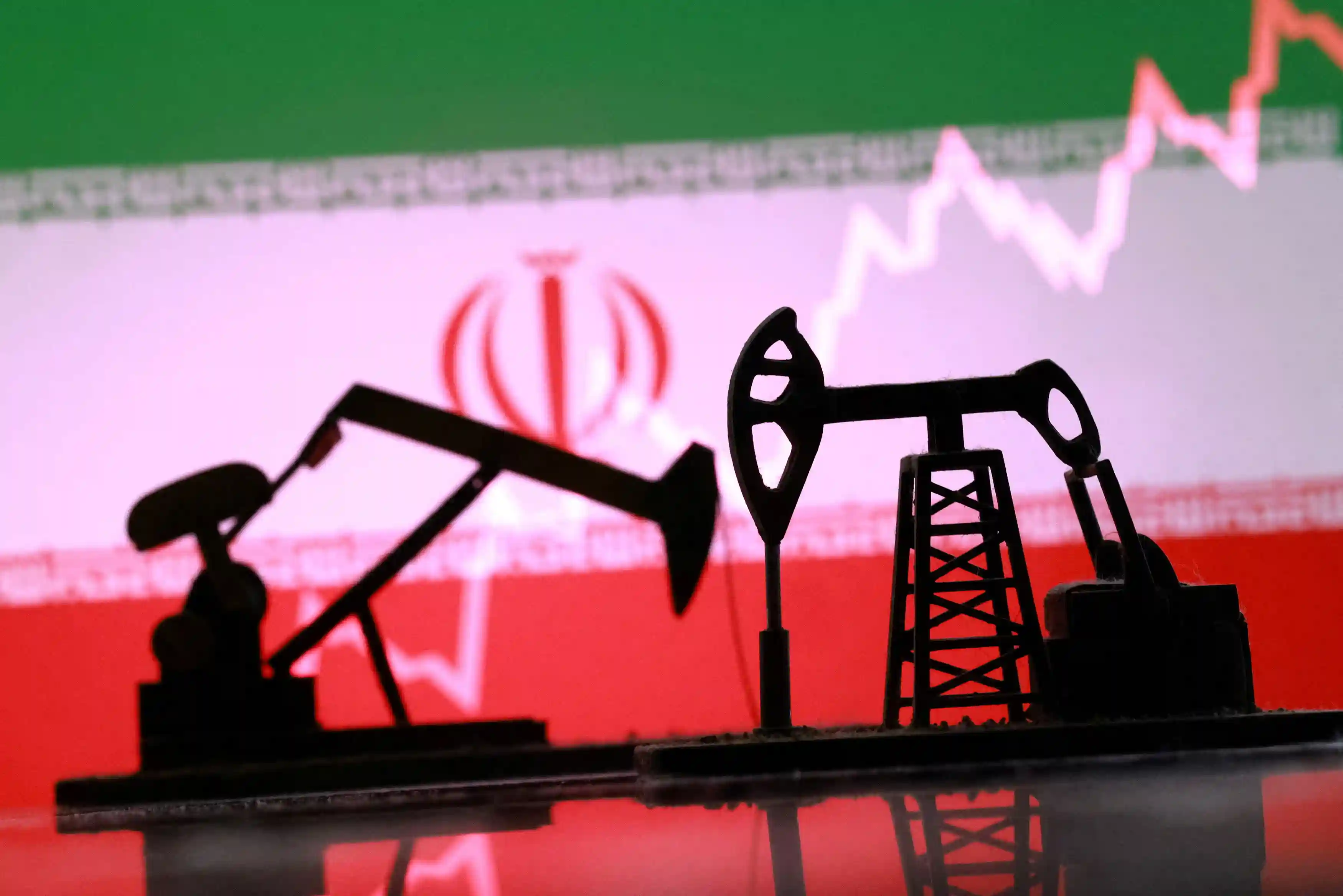
The inflation story that is driving Treasury yields higher cannot be separated from what is happening in global energy markets. Oil prices, which were already elevated coming into 2026, have surged dramatically since the onset of the Iran conflict, rising nearly 60 percent since that conflict began and approximately 80 percent since the start of the year. WTI crude oil was trading near $104 per barrel as of mid-week, with Brent crude near $108. The Strait of Hormuz remains closed, removing a critical shipping lane for roughly 20 percent of global oil supply. For U.S. bond investors, the oil price surge creates a direct transmission mechanism into consumer and producer prices. Energy is both a direct input to CPI and an indirect input to virtually every other price in the economy — transportation, manufacturing, agriculture, services. The Treasury Borrowing Advisory Committee, in its most recent report to Treasury Secretary Bessent, described oil's impact in stark terms: 'Financial markets have been highly influenced by oil prices, which are up nearly 60% since the start of the Iran conflict.' The committee noted that inflation expectations, 1-year inflation swaps in particular, have jumped by approximately 75 basis points in the United States alone. The geopolitical dimension adds to the uncertainty. President Trump, who described the first sentence of Iran's latest diplomatic proposal as 'unacceptable,' has said publicly that he is losing patience with the situation. That language suggests the conflict is not on a clear path to resolution in the near term, which means the energy price pressure may persist well into the second half of 2026. For investors trying to model inflation and Fed policy, a sustained oil shock of this magnitude is among the most difficult variables to incorporate — both because the geopolitical timeline is unpredictable and because the second-order effects on core inflation take months to show up clearly in the data.
What Rising Yields Mean for Stocks, Mortgages, and Portfolio Allocation
Treasury yields do not move in a vacuum. They are the risk-free rate against which every other financial asset in the economy is priced, and moves of the magnitude seen this week have direct and tangible consequences across multiple asset classes simultaneously. For equity investors, the channel is valuation. When the 10-year yield was sitting below four percent, investors could justify paying high multiples for growth stocks because the discount rate applied to future earnings was low. As the 10-year approaches and crosses 4.6 percent, those multiples come under pressure. The technology sector's sharp selloff on Friday — Nvidia down 4.4 percent, AMD and Micron each falling more than five percent — reflects exactly this dynamic: the same earnings stream is worth less when discounted at a higher rate. For mortgage borrowers, the impact is more immediate. The 30-year fixed mortgage rate was already sitting at 6.36 percent heading into the week. If the 10-year yield holds at current levels or moves higher, mortgage rates will follow, further constraining affordability in a housing market that is already struggling with limited inventory and elevated prices. For bond investors themselves, the week's move created what some portfolio managers are beginning to describe as a genuine entry opportunity. The 10-year at 4.59 percent offers income that was unavailable for most of the past decade, and if the inflation shock is ultimately transitory — tied primarily to the energy price surge rather than to a durable acceleration in underlying core prices — then current yields represent an attractive risk-adjusted return for investors who can tolerate near-term volatility. Fidelity's fixed income research team noted earlier this year that U.S. Treasury yields had reached approximately fair value after the prolonged low-rate period following the Global Financial Crisis, and that assessment looks even more compelling at the current yield levels.
How Investors Are Repositioning in Response to the Yield Surge
The practical question for investors managing portfolios is not simply whether yields will go higher, but how to position across asset classes in a world where the rate trajectory is suddenly uncertain in a new direction — up rather than down. Several themes are emerging from conversations with portfolio managers and from flows data released this week. First, the shift from long-duration to short-duration fixed income has accelerated. Investors who were extending duration in anticipation of rate cuts have been reversing those trades, moving into shorter-maturity Treasuries and money market instruments where the yield is nearly as attractive but the price sensitivity to further yield increases is far lower. Second, the energy sector has seen renewed interest as a portfolio hedge. Stocks in oil production, refining, and related services have benefited directly from the rise in crude prices, and their valuations provide a natural offset to the inflation pressure that is hurting other sectors. Third, there has been notable demand at the government's own bond auctions despite the generally negative market tone — a $25 billion auction of 30-year Treasuries held during the week was met with adequate demand at yields slightly above pre-auction levels, suggesting that at a price, there are still institutional buyers willing to extend duration. The debt sustainability dimension adds a longer-term layer to the yield story. The annual cost of servicing U.S. federal debt has crossed $1 trillion per year, and the government's total mandatory spending obligations — debt service, defense, Social Security, and Medicare combined — now exceed estimated annual tax revenues. That structural deficit requires the issuance of $1.5 to $2 trillion in new debt each year, which means Treasury yields must stay high enough to attract the buyers necessary to finance that issuance. Some bond market analysts argue this structural demand for yield is a permanent feature of the current environment, not a temporary response to energy prices — and that the rate landscape for the next several years will look fundamentally different from the near-zero rate world that dominated from 2008 through 2021.
The Treasury yield surge that defined the week of May 16 is not merely a technical market development. It is a signal that the interest rate assumptions embedded in financial plans, corporate investment decisions, mortgage payments, and portfolio strategies need to be reassessed in light of a more durable inflation picture than most market participants had anticipated at the start of the year. The Iran conflict's energy price impact, the acceleration in both CPI and PPI, and the market's complete repricing of Fed rate expectations from cuts to hikes within a span of months — these are the kinds of macro shifts that take time to fully work through an economy and a market. The full impact on corporate earnings, housing affordability, consumer spending, and government borrowing costs will not be visible in the May data or even the June data. It will emerge quarter by quarter through the second half of 2026 and into 2027. For investors, the message from this week's bond market action is both clear and uncomfortable: the cost of capital has moved materially higher, and the investment strategies that worked in a declining-rate environment need to be tested against a different set of assumptions. That recalibration is already underway in professional portfolios. The question is whether retail investors, many of whom built their return expectations around a world of falling rates and expanding equity multiples, are fully prepared for what higher-for-longer actually means across their entire financial picture.
Leave a Comment
Your email address will not be published. Required fields are marked *