Stock Market
Dow at 50,000 as AI Rally Fuels Record Highs
The Dow reached 50,000 while the S&P 500 and Nasdaq posted record highs as strong earnings and AI stocks fueled the rally.

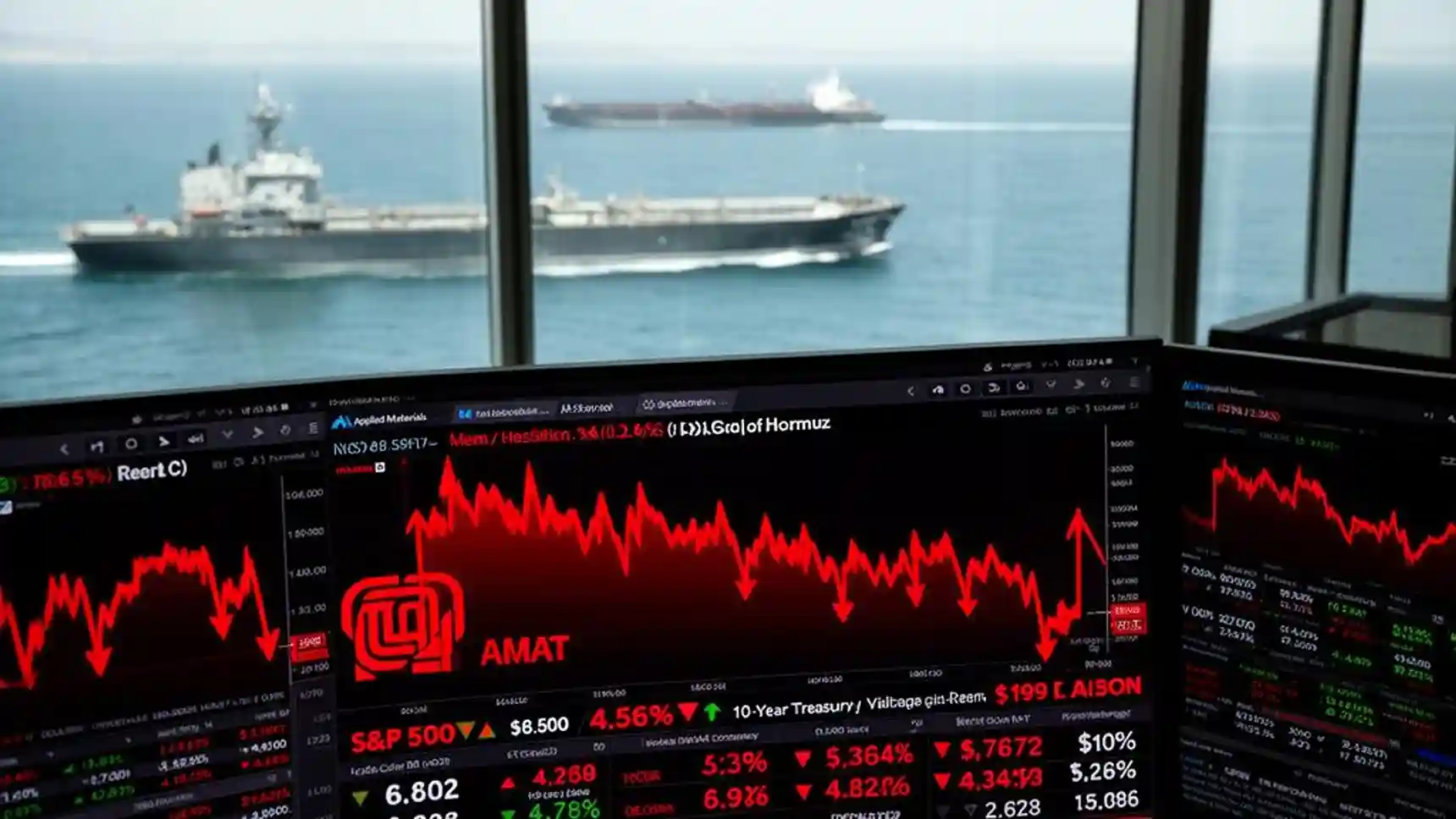
Dow Reclaims 50,000 for the First Time Since February
It took a few months, but the Dow is back above 50,000. The index crossed that threshold Thursday and held it through the close, finishing at 50,063.45 — a milestone the market had not seen since February. The S&P 500 crossed 7,500 for the first time, closing at 7,502.04. The Nasdaq settled at 26,635.22. All three indexes finished at record highs. The Dow's return to 50,000 matters beyond the round number. After weeks of being the laggard — the S&P and Nasdaq had already erased their losses from the Iran war outbreak by mid-April — the Dow finally caught up. The index's recovery reflects something broader: corporate earnings have been strong across a wider range of companies, not just the mega-cap tech names that dominate the Nasdaq. Industrial and financial stocks, which carry more weight in the Dow, have been contributing to the rally in a way that gives it a sturdier foundation.
Cisco's Numbers Were the Real Market Catalyst
The single biggest individual catalyst Thursday was Cisco. The company reported quarterly revenue of $15.84 billion — a record — and beat earnings estimates with adjusted EPS of $1.06. Then it dropped the number that lit up trading desks across Wall Street: AI infrastructure orders for the fiscal year, previously projected at $5 billion, are now expected to reach $9 billion. That 80% upward revision in a single quarter is not a small adjustment. It tells you that hyperscale cloud providers — the Amazons, Microsofts, and Googles of the world — are spending more on AI infrastructure than anyone publicly projected just three months ago. Third-quarter orders from hyperscalers alone came in at $1.9 billion, compared to $600 million in the same quarter a year earlier. That is a more-than-three-fold jump in large-customer AI spending at just one major network equipment provider. Cisco shares surged 14.4% to an all-time high. Broadcom followed with a 5% gain to a 52-week high. The message those numbers sent to the broader market: AI capital expenditure is not slowing down. It is accelerating.
Earnings Season Has Been Broadly Strong — Not Just in Tech
The backdrop to Thursday's Dow milestone is one of the better earnings seasons the market has seen in years. Of the 440 S&P 500 companies that had reported first-quarter 2026 results by this point, 83% beat analyst estimates. That beat rate is well above the historical average of around 72%. Annual earnings growth projections for the S&P 500 have been revised sharply higher — from 14.4% in April to 28.6% now. That kind of upgrade to the earnings outlook is the sort of fundamental development that justifies higher stock prices, not just momentum. It also explains why the rally has broadened beyond the handful of AI names that drove gains in 2025. Consumer companies, industrials, and financial firms have been delivering solid results too. Klarna Group, the buy-now-pay-later firm, reported swinging to a $1 million profit in the first quarter from a $99 million loss a year ago. Companies across the economy are managing costs better and generating revenue growth at the same time — and that combination is showing up in stock prices.
Trump-Xi Summit Gave Markets a Diplomatic Boost
The market did not operate in a political vacuum Thursday. President Trump was in Beijing for a two-day summit with Chinese leader Xi Jinping, and the headlines out of those talks were market-friendly. Xi reportedly told the American business delegation — which included Nvidia's Jensen Huang, Tesla's Elon Musk, and Apple's Tim Cook — that their companies could be deeply involved in China's ongoing reform and opening. He said China's door will only open wider. That is the kind of language that moves institutional money, because it signals a potential easing of the technology restrictions and trade barriers that have been a source of uncertainty for years. U.S. Treasury Secretary Scott Bessent added fuel to the fire when he told CNBC that China had agreed to use its influence with Iran to help reopen the Strait of Hormuz. China imports more than half its oil from the Middle East and has real leverage with Tehran. If it actually uses that leverage, global oil prices come down, inflation pressures ease, and the case for the Fed to hold rates steady — or eventually cut — gets stronger.
Cerebras IPO Signals the AI Investment Boom Is Still Running
The market also got a strong signal from a first-time stock offering. Cerebras Systems, the Silicon Valley AI chipmaker, made its Nasdaq debut Thursday and turned in one of the most dramatic first-day performances in recent memory. Priced at $185 per share and valuing the company at roughly $56 billion on a fully diluted basis, the stock opened at $350 — nearly double the IPO price — and briefly traded at $385 before a circuit breaker halted activity. It closed up 68%, pushing the company's market cap to around $95 billion. The IPO raised $5.55 billion, making it the largest U.S. technology offering since Arm went public in 2023. The order book was more than 20 times oversubscribed. Cerebras posted $510 million in revenue last year, up 76%, and generated a profit — something many IPO candidates cannot say. Its customers include Amazon and OpenAI. The debut reinforced a point that corporate earnings have also been making: real money is flowing into AI infrastructure, and investors are willing to pay a significant premium to get exposure to it.
Roughly $8 Trillion in Cash Is Still Sitting on the Sidelines
One number that Wall Street strategists keep mentioning is $8 trillion — the approximate amount currently sitting in money market funds across the country. That cash did not go into the market during the initial Iran war panic in March, when stocks briefly sold off. It has not fully deployed during the recovery rally either. Strategists at Merrill Lynch and Bank of America Private Bank have been framing every pullback as a buying opportunity partly because of that dry powder. If even a fraction of that money moves from money markets into equities, it provides a sustained bid under stock prices that could keep this rally going longer than many skeptics expect. The challenge is that money market funds are still paying competitive yields in a high-rate environment, so there is no urgency to move. But momentum creates its own logic. When indexes hit consecutive record highs and earnings keep beating, sitting in cash starts to feel expensive — and that psychology is slowly pulling capital off the sidelines and into equities.
Leave a Comment
Your email address will not be published. Required fields are marked *