Stock Market
SpaceX IPO Targets $1.75 Trillion Nasdaq Listing
SpaceX plans a Nasdaq IPO at a $1.75 trillion valuation, aiming to raise $75 billion in one of the largest public offerings ever.

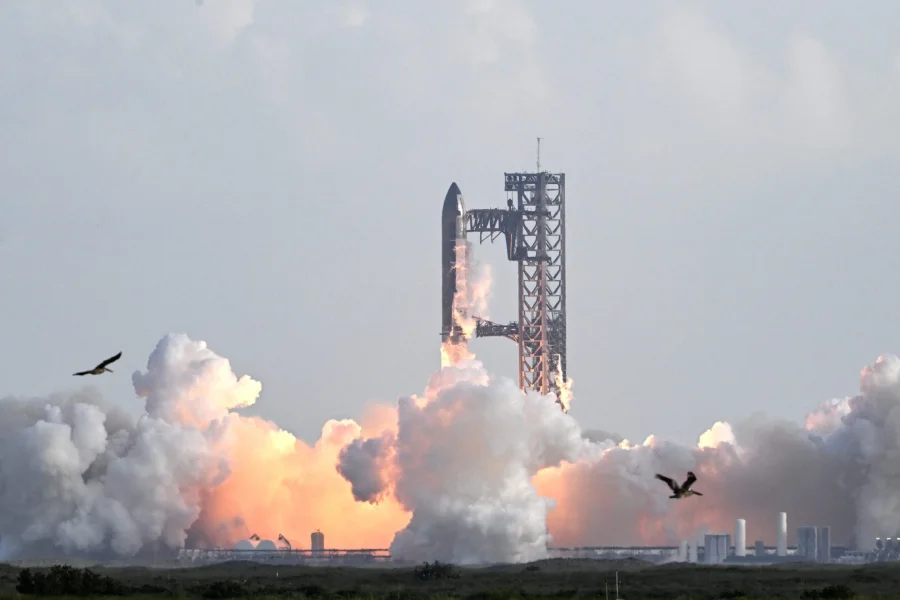
SpaceX Is Going Public — June 12, Nasdaq, $1.75 Trillion
The most anticipated stock market event in years just got a date. SpaceX is targeting June 12, 2026 for its initial public offering on the Nasdaq exchange under the ticker symbol SPCX. The company is seeking a valuation of $1.75 trillion, which would make it the largest IPO in the history of global financial markets — surpassing Saudi Aramco's $1.7 trillion listing in 2019 and raising roughly $75 billion in fresh capital, more than double Alibaba's record $25 billion raise in 2014. SpaceX confidentially filed its draft S-1 prospectus with the SEC on April 1, 2026 under the internal codename 'Project Apex.' The public S-1 is expected to drop around May 20 to 22, with the institutional roadshow starting the week of June 8 and final pricing on June 11. Twenty-one banks are in the syndicate, led by Morgan Stanley, Goldman Sachs, JPMorgan, Bank of America, and Citigroup. The company also secured a $20 billion bridge loan to refinance existing debt ahead of pricing. At $1.75 trillion, SpaceX would immediately rank among the ten most valuable publicly traded companies on earth — ahead of Meta, Berkshire Hathaway, and Tesla.
What SpaceX Actually Is Now — It Is Bigger Than Rockets
Before assessing the valuation, you need to understand what SpaceX has become since most people last checked. In February 2026, SpaceX completed a $250 billion all-stock merger with xAI — Elon Musk's artificial intelligence company that owns X, formerly Twitter, and operates the Grok AI assistant. Musk announced in May that xAI is now fully absorbed into SpaceX and will rebrand as SpaceXAI. The company now operates across four distinct business lines: launch services through Falcon 9, Falcon Heavy, and Starship; Starlink satellite broadband with more than 10 million active subscribers; Starshield, its government and military satellite program with $24.4 billion in U.S. government contracts since 2008; and AI compute infrastructure, including the Colossus supercomputer cluster in Memphis, Tennessee, which houses more than 100,000 Nvidia H100 GPUs and recently signed a compute infrastructure deal with Anthropic. Combined 2025 revenue across the business came in at approximately $18.67 billion — up sharply from $9.7 billion in 2023. Starlink is the cash engine, generating $4.42 billion in operating income last year. The AI division is the wild card, burning $6.4 billion in operating losses in 2025 as SpaceX builds out infrastructure.
The Valuation Question Wall Street Is Arguing About
A $1.75 trillion price tag at roughly $18.67 billion in trailing revenue implies a price-to-sales multiple of more than 90 times. That number makes even the most aggressive technology investors pause. NYU finance professor Aswath Damodaran — known on Wall Street as the Dean of Valuation — ran his own analysis and arrived at a fair-value estimate closer to $1.22 trillion. That is 40% below the IPO target. Scottish Mortgage Investment Trust, the most transparent public shareholder in SpaceX, carries its stake at a $1.25 trillion valuation as of March 31, 2026 — also well below the $1.75 trillion target. What makes the valuation debate complicated is the uncertainty is not symmetrically distributed. Damodaran noted that the range of outcomes for SpaceX is weighted more to the upside than the downside, because Starlink still has penetrated less than 5% of the global internet market, Starship has not yet begun commercial operations, and the AI business could scale quickly once infrastructure spending normalizes. Projections from Morningstar see SpaceX revenue reaching $149 billion by 2040. If those projections prove accurate, $1.75 trillion in 2026 looks reasonable in hindsight. If they do not, early public buyers will have paid a steep premium.
Nasdaq Changed Its Rules to Accommodate the SpaceX Listing
The scale of the SpaceX IPO is so large that Nasdaq actually adjusted its index inclusion rules before the company goes public. Effective May 1, 2026, mega-IPOs ranked in the top 40 companies by market cap are eligible for fast-track inclusion into the Nasdaq 100 Index just 15 trading days after their debut — down from the standard waiting period. SpaceX explicitly stated that securing early Nasdaq 100 inclusion is a mandatory condition for choosing to list on the exchange. The significance of that condition is financial and mechanical: once SpaceX enters the Nasdaq 100, every passive index fund and ETF that tracks the index is required to buy the stock. That creates a guaranteed wave of institutional buying that provides downside support in the early weeks of trading. Nasdaq's willingness to change its rules specifically to accommodate this listing reflects the extraordinary weight SpaceX carries in the current IPO market. There were only 31 tech IPOs in all of 2025. SpaceX alone could dwarf the combined value of everything that went public last year.
Retail Investors Get an Unusual Opportunity — But With Strings Attached
One notable feature of the SpaceX IPO structure is that the company has reportedly reserved 30% of the offering for retail investors — an unusually large allocation for a listing of this size. Most mega-cap IPOs direct the overwhelming majority of shares to institutional buyers, leaving retail investors to buy in the open market at whatever price the stock trades to after the IPO pop. SpaceX's decision to make a significant retail allocation is widely read as a deliberate move by Musk to build broad public ownership in the company — similar to how Tesla built a massive individual investor base over time. The dual-class share structure, however, puts real limits on what public buyers actually get. Class A shares sold in the IPO carry limited voting rights, while Musk retains majority voting control through a structure that Reuters confirmed on April 29. In practical terms, that means retail investors get exposure to SpaceX's financial performance but effectively no governance leverage over the company. That is a standard arrangement for founder-controlled tech companies — but it is worth understanding before buying in.
What This Means for the Broader Stock Market
A $75 billion IPO does not happen in a vacuum. It pulls capital. Institutional investors who want allocation in the SpaceX offering will need to free up cash somewhere, which means selling existing positions in the weeks before pricing. That dynamic has historically created short-term selling pressure in the sectors most closely associated with an IPO candidate — in this case, AI, semiconductor, and aerospace stocks. The immediate impact on the market will also depend heavily on what the public S-1 says when it drops around May 20. If Starlink's margins are improving and the Colossus AI business is generating real revenue traction, the filing will confirm the bull case and investor excitement will hold. If the numbers reveal heavy capital spending that is not yet converting to cash, the market will discount the valuation quickly. Beyond the filing, the SpaceX IPO has larger symbolic significance for Wall Street. After years of private-market-only investing in the biggest tech companies, institutional and retail investors are finally getting access to a company that has arguably been the most transformative private business of the past decade. Whether the price is right is the argument. That the event is historic is not.
Leave a Comment
Your email address will not be published. Required fields are marked *